






The 5 Best Red Light Therapy Beds: An Industry Practitioner's Guide
The photobiomodulation (PBM) industry is currently flooded with exaggerated marketing claims, confusing metrics, and wildly overpriced hardware. When individuals and clinic owners begin searching for the best red light therapy beds, they are often bombarded with glossy brochures selling fifty-thousand-dollar tanning-bed-style devices that offer minimal clinical transparency. As industry practitioners who engineer and analyze clinical-grade light therapy devices at Nicebeam, we refuse to participate in the echo chamber. You must apply commercial and practical judgment when evaluating these massive capital expenditures. A full-body light therapy bed is not just a collection of LEDs; it is a complex thermodynamic and optical system that requires precision engineering, robust cooling, and verified irradiance output.

From our experience, the vast majority of consumers searching for full-body beds do not actually possess the physical floor space, the 220V electrical infrastructure, or the $40,000 to $100,000 required to install a commercial unit. However, for elite sports franchises, anti-aging clinics, and high-net-worth biohackers, investing in the best red light therapy beds is a strategic necessity. In this comprehensive guide, we will strip away the pseudoscience, review the definitive top contenders in the commercial bed space, and explain why upgrading to flexible, high-density alternatives like full-body mats is often the smarter, more practical choice for home users.
Quick Answer: The Top 5 Best Red Light Therapy Beds
If you are navigating the complex market of full-body photobiomodulation, these are the 5 best red light therapy beds currently available for clinical and heavy-duty home use:
- NovoThor: The undisputed gold standard for commercial clinics and professional sports teams. FDA-cleared, heavily researched, and priced over $100,000.
- LightStim LED Bed: The first FDA-cleared LED bed for temporary relief of muscle and joint pain, featuring multi-wave technology.
- TheraLight 360: A massive commercial unit delivering 360-degree irradiance with adjustable pulsing frequencies.
- Mito Red Light Bed: A more accessible prosumer bed aimed at high-end home installations.
- Nicebeam Full Body Red Light Therapy Mat: The ultimate practical alternative. It delivers full-body 660nm and 850nm coverage without the crushing weight, space requirements, or astronomical price tag of a rigid metal bed.
Table of Contents
- What It Is: Anatomy of an RLT Bed
- How It Works: The Mechanics of PBM
- Clinical Benefits
- Limitations and Hidden Risks
- Who Should Use It
- Who Does Not Need It
- The 5 Best Red Light Therapy Beds Reviewed
- Common Purchasing Mistakes
- Strict Buying Considerations
- Expert Recommendation
- Summary and Comparison Tables
- Frequently Asked Questions
What It Is: Anatomy of an RLT Bed
A true red light therapy bed is a commercial-grade, full-body enclosure that resembles a traditional UV tanning bed. However, instead of harmful ultraviolet fluorescent tubes, these beds are lined with thousands of high-intensity Light Emitting Diodes (LEDs). The best red light therapy beds are engineered with heavy-duty steel or aluminum chassis, active liquid or fan-based cooling systems to manage the immense heat generated by the diodes, and medical-grade acrylic surfaces for the user to lie on. They are designed to deliver a uniform dose of light energy (measured in Joules) across the entire surface area of the human body simultaneously.
How It Works: The Mechanics of PBM
Photobiomodulation operates on the principle of cellular absorption. In most professional situations, the best red light therapy beds utilize a dual-wavelength approach: visible red light (typically 630nm to 660nm) and invisible near-infrared light (NIR, typically 810nm to 850nm). When this specific light energy penetrates the skin, it is absorbed by chromophores within the mitochondria, specifically the enzyme cytochrome c oxidase. This absorption displaces nitric oxide, allowing oxygen back in, which kicks off a cascade of cellular events that dramatically increases the production of Adenosine Triphosphate (ATP). ATP is the raw cellular energy your body uses to repair tissue, reduce inflammation, and synthesize collagen. You can explore the skin-specific applications of this science in our red light therapy for wrinkles guide.
Clinical Benefits
The benefits of utilizing the best red light therapy beds are systemic. Because a bed treats the entire body simultaneously, the systemic release of nitric oxide improves whole-body blood circulation. For athletes, this translates to drastically reduced delayed onset muscle soreness (DOMS) and accelerated tissue repair. For clinical patients, full-body NIR penetration provides profound relief from chronic joint pain and rheumatoid arthritis. Aesthetically, the massive dose of 660nm red light promotes full-body collagen synthesis, improving skin tone and elasticity. If you are specifically targeting facial skin conditions like rosacea, you might also consider specialized targeted devices like the best LED masks for rosacea.
Limitations and Hidden Risks
We must use commercial and practical judgment: red light therapy beds have severe limitations. The most glaring is the physical footprint. A commercial bed weighs between 300 and 600 pounds and requires a dedicated room. Secondly, they consume massive amounts of electricity, frequently requiring a dedicated 220V/30Amp circuit installation. Finally, the acrylic surface separating your body from the LEDs introduces a phenomenon called "optical scatter." Because you are an inch or two away from the diodes, the inverse square law of light dictates that a significant portion of the irradiance is lost before it hits your skin, requiring the bed to be overpowered (and overpriced) to compensate.
Who Should Use It
For heavy-duty applications—such as chiropractic offices, wellness spas, functional medicine clinics, and professional athletic training facilities—commercial red light beds are essential. They provide a high-throughput, hands-free treatment modality that can be monetized. For these commercial users, spending $60,000 on a bed makes sense because the Return on Investment (ROI) can be calculated based on client session fees.
Who Does Not Need It
For beginners, standard home users, and individuals looking for convenient daily recovery, buying a commercial bed is a massive misallocation of funds. You do not need to take out a second mortgage to achieve full-body photobiomodulation. Modern flexible LED technology has rendered rigid metal beds obsolete for residential use. If you want full-body coverage at home, you should be researching a full body red light therapy mat guide instead.
The 5 Best Red Light Therapy Beds Reviewed
1. NovoThor Whole Body Light Pod
The NovoThor is universally recognized as the apex predator of the PBM industry. Found in the locker rooms of the NFL and elite medical clinics, it utilizes a proprietary delivery system to ensure perfectly uniform irradiance across the body. It is the most scientifically validated bed on the market, but at an estimated price of over $110,000, it is strictly for high-end commercial use.
2. LightStim LED Bed
LightStim is a pioneer in the industry and their bed was the first to receive FDA clearance for temporary relief of muscle and joint pain. It utilizes LightStim MultiWave® Patented Technology, simultaneously emitting multiple wavelengths of light. It is heavily used in luxury wellness spas and dermatology clinics.
3. TheraLight 360
The TheraLight 360 is a massive, high-powered clinical bed that boasts 360-degree light delivery. It offers distinct pulsing frequencies (like Nogier frequencies) which some practitioners prefer for specific neurological or deep-tissue therapies. It requires significant dedicated power infrastructure to operate.
4. Mito Red Light Bed
Positioned as a "prosumer" option, the Mito Red bed attempts to bridge the gap between clinical beds and wealthy home users. It offers solid irradiance numbers and a durable build, but still requires a large dedicated room and carries a price tag in the tens of thousands of dollars.
5. Nicebeam Full Body Red Light Therapy Mat (The Practical Alternative)
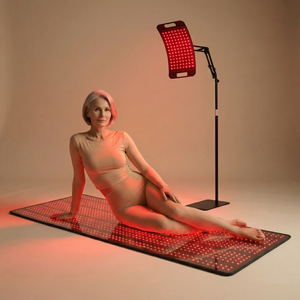
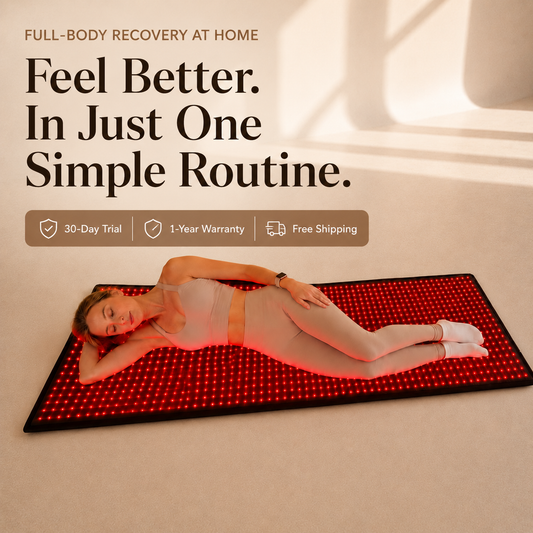
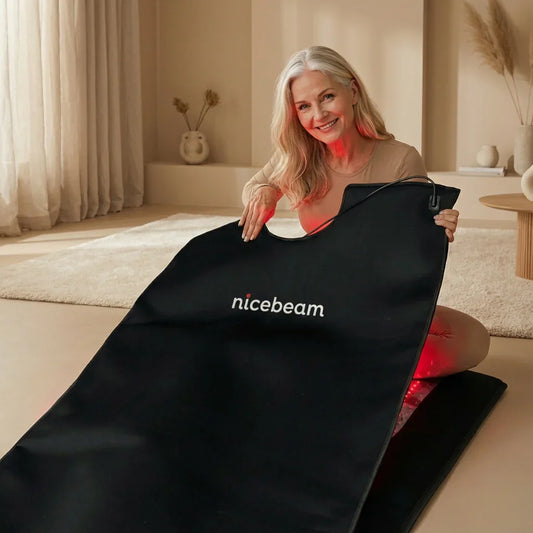
We feature our own Nicebeam Mat on this list of the best red light therapy beds because it fundamentally solves the space, cost, and distance-to-skin problems of rigid commercial beds. By wrapping the body in medical-grade neoprene embedded with 3,840 LEDs, the mat places the diodes directly against the skin. This zero-distance contact means you achieve maximum clinical penetration without needing a massive power supply. It is the ultimate solution for heavy-duty home recovery.

Nicebeam Full Body Red Light Therapy Mat
Why buy an oversized, rigid metal bed when you can achieve direct-to-skin full-body irradiance? The Nicebeam Mat delivers professional-grade 660nm and 850nm wavelengths in a flexible, space-saving design that folds away when not in use.
- Unmatched LED Density: 3,840 high-output LEDs (1280 Red + 2560 Near-Infrared).
- Clinical Power: 130mw/cm² irradiance delivered directly to the skin for maximum ATP stimulation.
- Practical & Portable: Weighs only 10 lbs. Made from durable, comfortable medical-grade neoprene.
- Safety First: Features ultra-low EMF emission (0.1 µT @ 6") and a 99,999-hour LED lifespan.
Common Purchasing Mistakes
In our testing and market analysis, the most catastrophic mistake buyers make is confusing "total wattage" with "irradiance." A massive commercial bed might claim to draw 5,000 watts from the wall, but if the LEDs are of poor quality or the acrylic shield is too thick, the actual energy reaching the user's skin (irradiance, measured in mW/cm²) might be terribly low. You must verify the irradiance at the actual distance the skin will be from the diodes.
Another profound error is ignoring EMF (Electromagnetic Field) emissions. Cheap, unbranded beds from overseas suppliers often use unshielded power drivers that emit massive amounts of EMF, directly counteracting the biological benefits of the therapy. Always demand third-party EMF testing reports before purchasing. For more insights on avoiding scams, read our red light therapy mat buying guide.
Strict Buying Considerations
When you are ready to invest, demand transparency. A reputable manufacturer must provide the exact LED count, the ratio of 660nm to 850nm diodes, and the beam angle of the lenses. If you are a clinic owner, verify that the bed has an active cooling system; LEDs lose their spectral accuracy and shift wavelengths if they overheat. If you are a home user realizing a bed is too cumbersome, explore our comparison on the red light therapy bag vs panel comparison to find a form factor that actually fits your lifestyle.
Expert Recommendation
From our experience engineering PBM devices, we unequivocally recommend that residential users do not buy rigid commercial beds. They are architectural nightmares for a standard home. If you want the systemic, full-body benefits of the best red light therapy beds without the $50,000 price tag, we recommend investing in a high-density, full-body mat like the Nicebeam. The direct-to-skin contact eliminates optical scatter, ensuring you get clinical-grade dosing while lying comfortably in your own bed or on your living room floor.
Summary and Comparison Tables
| Brand / Model | Target Audience | Primary Advantage |
|---|---|---|
| NovoThor | Clinical / Pro Sports | Gold standard research validation. |
| LightStim Bed | Spas / Dermatologists | MultiWave® Technology & FDA Clearance. |
| TheraLight 360 | High-volume clinics | 360-degree coverage and adjustable pulsing. |
| Nicebeam Mat | Heavy-Duty Home Use | Direct-to-skin contact, zero space requirements, affordable. |
| Feature | Rigid Commercial Bed | Flexible Full-Body Mat (Nicebeam) |
|---|---|---|
| Distance to Skin | 1 to 4 inches (Optical loss occurs) | 0 inches (Direct contact, maximum absorption) |
| Space Requirement | Dedicated 10x10 room | Rolls up; stores in a closet |
| Power Requirement | 220V Dedicated Circuit | Standard 110V Wall Outlet |
| Price Range | $30,000 - $110,000+ | $1,000 - $2,500 |
| Pros (Advantages) | Cons (Limitations) |
|---|---|
| Treats the entire body simultaneously, cutting session times to 10-15 minutes. | Astronomical upfront capital expenditure. |
| Provides massive systemic release of nitric oxide for rapid recovery. | Requires professional installation and heavy-duty electrical wiring. |
| Highly lucrative monetization asset for commercial clinics and spas. | Acrylic beds are uncomfortable and can induce claustrophobia. |
| Completely hands-free operation; requires zero user effort. | LEDs can overheat if the active cooling fans fail, degrading the unit. |
Frequently Asked Questions
Are red light therapy beds FDA approved?
The FDA does not "approve" red light therapy beds in the same way it approves pharmaceutical drugs. Instead, top-tier beds like the LightStim receive FDA "Clearance" (Class II Medical Device status) for specific indications, such as the temporary relief of minor muscle and joint pain, arthritis, and muscle spasms. Always verify a manufacturer's FDA clearance status before purchasing a commercial unit.
How often should you use a red light therapy bed?
In most professional situations, clinical protocols recommend using a full-body bed for 10 to 15 minutes per session, 3 to 5 times a week. Because beds deliver a massive total body dose of Joules, overexposure (the biphasic dose response) can actually negate the benefits. Consistency over weeks and months is far more important than overly long single sessions.
Is a red light therapy mat as effective as a commercial bed?
Yes, and in some aspects, it is superior. Because a mat like the Nicebeam wraps around you and places the LEDs directly against the skin, you eliminate the light scatter that occurs in a rigid bed where the LEDs are inches away behind an acrylic shield. This direct contact ensures maximum penetration of the 850nm NIR light into the deep tissues and joints.
Authoritative Industry References
To ensure our clinical evaluations and engineering standards are robust, we reference data and guidelines from the following authoritative bodies:
- National Institutes of Health (NIH) / PubMed - Peer-reviewed academic literature validating the biological mechanisms of photobiomodulation, specifically regarding cytochrome c oxidase and ATP production.
- U.S. Food and Drug Administration (FDA) - Federal guidelines defining the regulatory classifications, safety standards, and allowable marketing claims for Class II photobiomodulation medical devices.
- WebMD - Comprehensive medical overviews detailing the clinical efficacy, safe usage, and verified health benefits of red light therapy for both skin and deep tissue recovery.
If you are exploring smaller form factors for targeted sleep benefits, review our guide on the best red light bulbs for sleep.