






Does a Red Light Help With Depression?
In recent years, the conversation surrounding mental health and holistic wellness has expanded rapidly. Traditional treatments for mood disorders, while effective for many, often come with side effects that prompt individuals to seek adjunctive, non-invasive therapies. At Nicebeam, we frequently interact with customers seeking alternative wellness modalities, and one of the most common questions we receive is: does a red light help with depression? From our experience in the photobiomodulation (PBM) industry, the intersection of advanced light therapy and mental health represents one of the most exciting frontiers in modern science.

To understand whether a red light help with depression, it is essential to delve into the biological mechanisms of photobiomodulation. Red and near-infrared (NIR) light wavelengths penetrate deeply into the body and the brain, stimulating cellular energy production, reducing systemic inflammation, and regulating circadian rhythms. In this comprehensive expert guide, we will analyze the clinical evidence, explore the physiological pathways, and explain how integrating Nicebeam devices into your daily routine can support your mental and emotional well-being.
Table of Contents
- 1. Biological Mechanisms: How Does a Red Light Help With Depression?
- 2. Combating Neuro-Inflammation Through Systemic PBM
- 3. Clinical Evidence: Can a Red Light Help With Depression?
- 4. Red Light Therapy vs. Traditional SAD Lamps
- 5. The Sleep Connection: Circadian Rhythm Regulation
- 6. Practical Application: Using Nicebeam Devices at Home
- 7. Summary Table: Red Light Therapy and Mental Health
- 8. Frequently Asked Questions (FAQs)
- 9. Academic and Clinical References
1. Biological Mechanisms: How Does a Red Light Help With Depression?
When consumers ask us to explain how a red light help with depression, we must first look at cellular biology. The primary mechanism of red light therapy revolves around the mitochondria, often referred to as the powerhouses of our cells. Wavelengths between 600nm and 900nm (which encompass both red and near-infrared light) are absorbed by a photoacceptor enzyme called cytochrome c oxidase, located within the mitochondrial membrane.
In individuals suffering from major depressive disorder (MDD) or chronic stress, mitochondrial dysfunction is frequently observed. The brain consumes roughly 20 percent of the body's energy despite accounting for only 2 percent of its weight. When brain cells lack sufficient adenosine triphosphate (ATP)—the primary energy currency of the cell—cognitive function, mood regulation, and emotional resilience suffer. By stimulating cytochrome c oxidase, red light therapy enhances ATP production, improves cellular respiration, and increases blood flow to the prefrontal cortex. This surge in cerebral energy is a foundational reason why a red light help with depression symptoms, providing the brain with the metabolic resources required to regulate mood effectively.
2. Combating Neuro-Inflammation Through Systemic PBM
Modern psychiatric research increasingly views depression not merely as a chemical imbalance of neurotransmitters, but as an inflammatory disorder. High levels of systemic inflammation are strongly correlated with severe depressive episodes. Consequently, many medical professionals have investigated whether a red light help with depression by lowering these inflammatory markers.
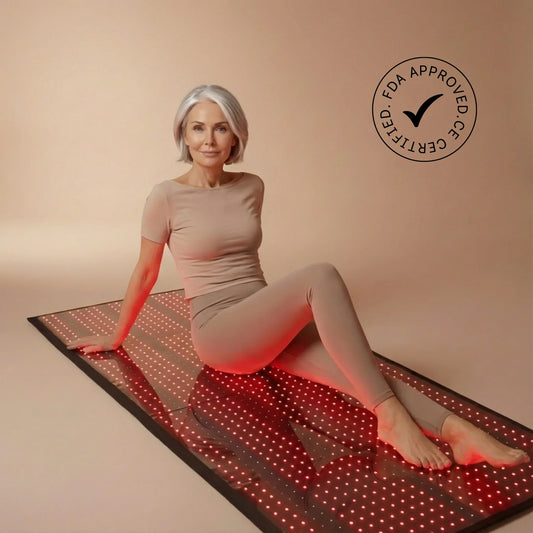
From our professional experience, red light therapy is unparalleled in its ability to reduce oxidative stress and systemic inflammation. When red light is absorbed by the body, it promotes the release of nitric oxide, which dilates blood vessels and improves circulation. It also modulates the release of pro-inflammatory cytokines. We recommend full-body treatments to maximize this anti-inflammatory effect. Utilizing large surface-area devices can lower systemic inflammation throughout the body, which directly impacts the brain via the gut-brain axis and the circulatory system. For those interested in full-body applications, we highly suggest reviewing our Full body red light therapy mat guide to understand how systemic exposure maximizes wellness outcomes.
3. Clinical Evidence: Can a Red Light Help With Depression?
The skepticism surrounding alternative therapies is understandable, which is why we rely heavily on peer-reviewed clinical trials. So, does a red light help with depression according to the scientific community? The answer is increasingly affirmative. Studies focusing on transcranial photobiomodulation (t-PBM)—where near-infrared light is directed at the scalp to penetrate the skull and reach the cerebral cortex—have shown profound antidepressant effects.
Clinical trials have demonstrated that patients suffering from treatment-resistant depression experienced significant reductions in their Hamilton Depression Rating Scale (HAM-D) scores after undergoing consecutive sessions of near-infrared light therapy. The light stimulates neurogenesis (the growth of new neurons) and synaptogenesis (the formation of new synapses), allowing the brain to rewire itself and recover from the rigid neural loops often associated with depressive rumination. Seeing a red light help with depression in clinical settings provides immense validation for integrating these modalities into home care routines.
4. Red Light Therapy vs. Traditional SAD Lamps
A common point of confusion among our clients is the difference between traditional bright light therapy and red light therapy. Standard SAD (Seasonal Affective Disorder) lamps emit 10,000 lux of bright white or blue light to simulate daylight and trigger wakefulness. While excellent for seasonal depression, they operate on an entirely different biological pathway, primarily affecting the retina to suppress melatonin.
When asking does a red light help with depression in a different way, the answer is yes. Red light therapy does not rely on ocular stimulation; it relies on deep tissue and cellular absorption. Therefore, you do not need to stare into a red light panel for it to be effective. In fact, you can use red light therapy in the evening to heal cellular damage without disrupting your sleep cycle, whereas a SAD lamp would cause severe insomnia if used after sunset.
5. The Sleep Connection: Circadian Rhythm Regulation
It is impossible to address depression without addressing sleep architecture. Chronic insomnia and fragmented sleep are both symptoms and primary drivers of depressive episodes. One of the most effective ways we see a red light help with depression is through the profound optimization of sleep quality.
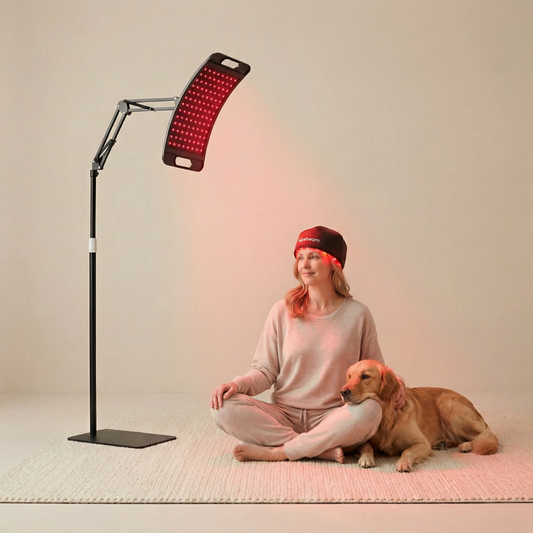
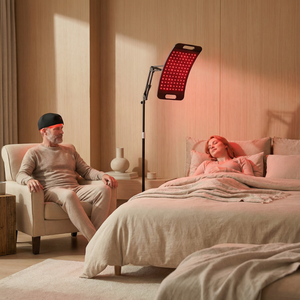
Exposure to blue light from screens before bed destroys melatonin production. Conversely, red light has a low color temperature and does not inhibit melatonin. By swapping standard bedroom lighting for targeted red light spectrums, you signal to your brain that it is time to rest, significantly improving deep sleep and REM cycles. A well-rested brain is infinitely more capable of emotional regulation. We strongly recommend optimizing your evening environment by consulting our guide on the Best red light bulbs for sleep.
6. Practical Application: Using Nicebeam Devices at Home
Knowing that a red light help with depression is only the first step; practical application is where true transformation occurs. At Nicebeam, we design affordable, high-quality solutions tailored for physical, emotional, and mental wellness at home. Depending on your lifestyle, there are multiple ways to integrate photobiomodulation into your routine.
Red Light Therapy Mats
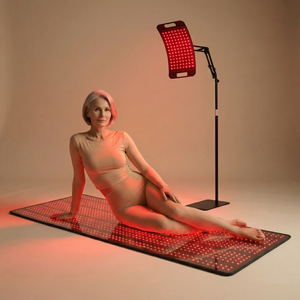
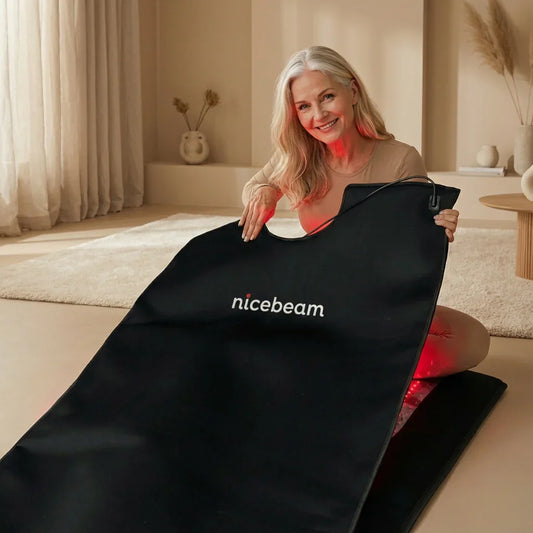
For those looking for deep relaxation and systemic inflammation reduction, mats are exceptional. Lying on a mat allows for maximum skin contact, promoting full-body circulation and stress relief. To select the right product, review our Red light therapy mat buying guide, and explore the top-rated options in our Top red light therapy mats for home use.
Therapy Bags and Panels
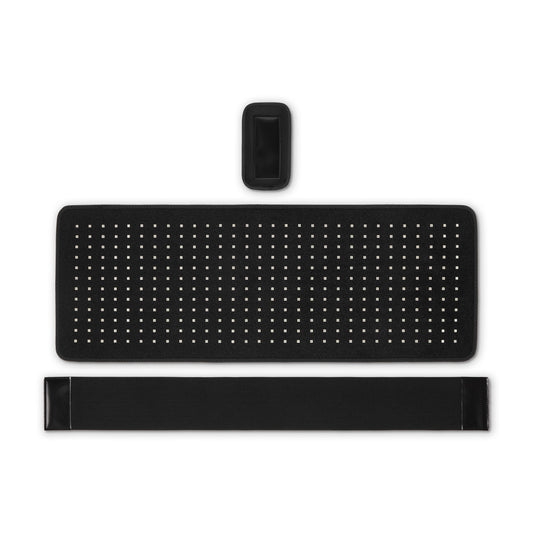
If you prefer targeted therapy or need a portable solution, understanding the difference between form factors is crucial. We encourage reading our Red light therapy bag vs panel comparison to find your ideal fit, or browsing the Best red light therapy bags 2025 for on-the-go recovery.
Lamps for Targeted Facial and Cranial Exposure
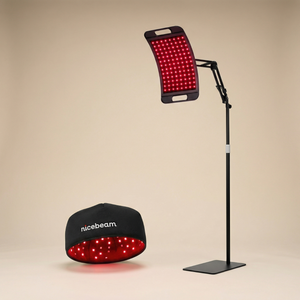
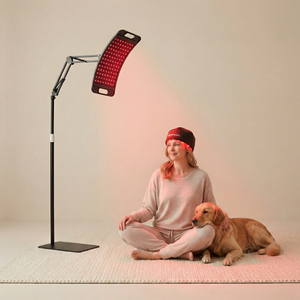
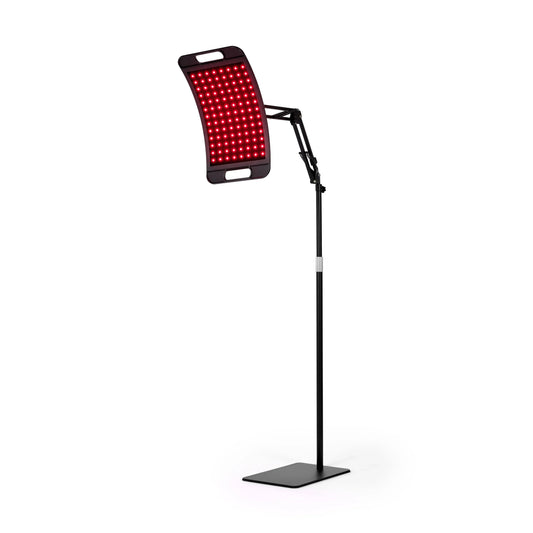
For those interested in transcranial application or facial rejuvenation that boosts confidence, a targeted lamp is ideal. You can explore the Red light therapy lamp for home use to find devices that easily fit on a desk or nightstand.
7. Summary Table: Red Light Therapy and Mental Health
| Mechanism of Action | Biological Effect | Mental Health Benefit |
|---|---|---|
| Mitochondrial Stimulation | Increases ATP (cellular energy) production | Boosts brain energy, reducing mental fatigue and brain fog. |
| Inflammation Reduction | Lowers pro-inflammatory cytokines | Alleviates neuro-inflammation, a known driver of major depression. |
| Improved Blood Flow | Releases nitric oxide for vasodilation | Increases oxygenation to the prefrontal cortex, aiding mood regulation. |
| Circadian Rhythm Support | Preserves natural melatonin production | Improves sleep architecture, directly mitigating depressive symptoms. |
| Neurogenesis | Stimulates growth of new neurons and synapses | Enhances neural plasticity, helping the brain recover from chronic stress. |
8. Frequently Asked Questions (FAQs)
Does a red light help with depression as a standalone treatment?
While the clinical evidence showing that a red light help with depression is highly promising, we always recommend it as an adjunctive therapy. It should be used alongside proper nutrition, exercise, and professional medical guidance, rather than a total replacement for prescribed psychiatric treatments.
How often should I use Nicebeam devices to see mood improvements?
From our experience, consistency is key in photobiomodulation. We recommend using your Nicebeam mat, lamp, or bag for 10 to 20 minutes a day, 4 to 5 times a week. Cumulative exposure yields the best mitochondrial response.
Is it safe to shine near-infrared light on my head?
Yes. Transcranial photobiomodulation using near-infrared light (810nm - 850nm) has been studied extensively and is completely non-invasive and safe. It does not produce heat that could damage brain tissue, making it a safe modality for investigating how a red light help with depression at home.
Will red light therapy keep me awake at night?
Unlike blue or bright white light, red light does not suppress melatonin. In fact, utilizing red light in the evening helps signal your body to prepare for sleep. This is why many users report improved sleep quality when using our devices before bed.
9. Academic and Clinical References
To ensure our clients have access to the most rigorous scientific data regarding photobiomodulation and mental health, we highly encourage reviewing the following authoritative sources:
- National Center for Biotechnology Information (NCBI) - Review of transcranial photobiomodulation for major depressive disorder.
- U.S. National Library of Medicine - ClinicalTrials.gov - Database of ongoing and completed clinical studies investigating the efficacy of near-infrared light therapy on neurological and psychological conditions.
- National Institute of Mental Health (NIMH) - Extensive resources on the biological and inflammatory underpinnings of major depressive disorder and emerging therapeutic interventions.