







5 Best infrared light for sauna
By NiceBeam Engineering & Wellness Team
The therapeutic efficacy of any modern sauna relies entirely on the quality, safety, and emissivity of its heating source. As wellness technology advances, the demand for precision-engineered therapeutic environments has surged. For homeowners, athletes, and biohackers alike, identifying the Best infrared light for sauna use is critical to achieving core temperature elevation, deep tissue penetration, and cellular rejuvenation.

From our experience designing and manufacturing premium sauna systems, we understand that not all infrared emitters are created equal. Inferior heating elements can result in dangerous electromagnetic field (EMF) emissions, uneven heat distribution, and poor longevity. Conversely, the Best infrared light for sauna systems utilizes advanced carbon fiber or specialized ceramic technologies to produce highly bioavailable far-infrared wavelengths. In this comprehensive guide, we will analyze the top technologies available in 2026, establish the criteria for selecting the Best infrared light for sauna integration, and detail how these systems contribute to human health.
Table of Contents
1. Understanding Infrared Wavelengths in Saunas
Before evaluating the specific hardware, it is essential to understand the physics of infrared light. The infrared spectrum is divided into three distinct categories, each interacting with the human body differently. To find the Best infrared light for sauna applications, you must match the wavelength to your specific physiological goals.
- Near-Infrared (NIR): Penetrates the epidermis to promote skin health, wound healing, and cellular ATP production. It does not significantly raise core body temperature but is excellent for localized therapy.
- Mid-Infrared (MIR): Penetrates deeper into the soft tissue, increasing circulation and reducing inflammation. It is often utilized for pain management and muscle recovery.
- Far-Infrared (FIR): The most critical wavelength for saunas. FIR penetrates deeply into the body, resonating with water molecules to raise core body temperature from the inside out. This induces a profound, detoxifying sweat at lower ambient temperatures.
We recommend full-spectrum systems or high-emissivity FIR systems for general wellness. The Best infrared light for sauna use will consistently output these wavelengths without generating excessive ambient hot air, making the session more comfortable and significantly more effective.
2. The 5 Best Infrared Light for Sauna Systems
Based on our engineering analyses, thermal imaging tests, and clinical feedback, we have categorized the five Best infrared light for sauna systems available on the market today.
1. Advanced Carbon Floor and Wall Panel Systems
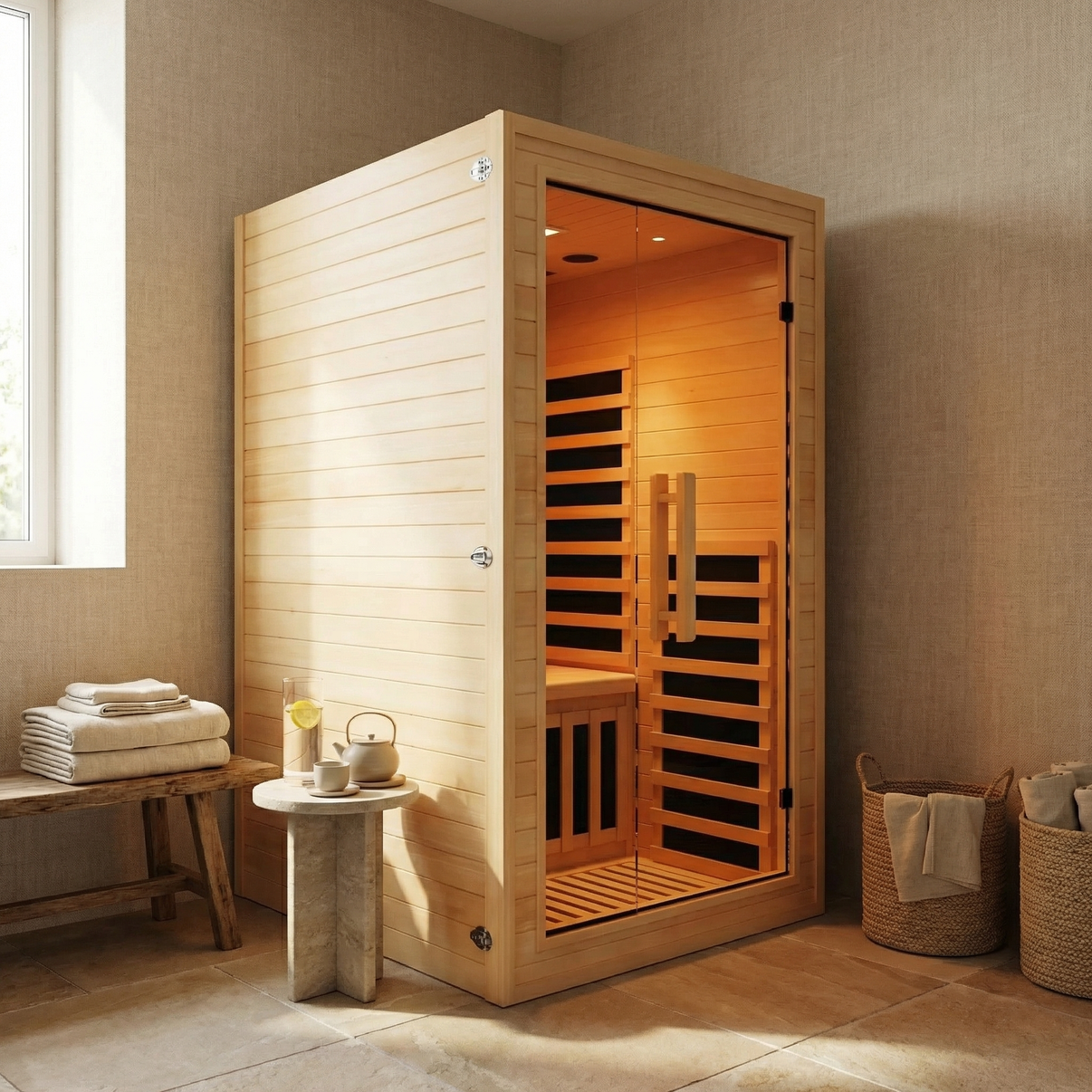
Taking the top position for the Best infrared light for sauna use is the ultra-low EMF carbon heating panel. These panels utilize flexible carbon fibers pressed between fiberglass or epoxy plates. Because they have a massive surface area, they produce a very even, gentle far-infrared heat with exceptionally low surface temperatures. This prevents hot spots and burn risks.
We recommend experiencing this technology firsthand through our meticulously engineered NiceBeam 1-2 Person Full-Body Infrared Sauna with Red Light Therapy. Designed for residential luxury, this unit features a built-in carbon floor panel heater and robust wall panels that maintain a therapeutic temperature range of 18 degrees Celsius to 65 degrees Celsius. Running on a standard 120V circuit, its heater switch is fully wattage adjustable via a 7-inch intuitive touchscreen control. We stand behind our carbon heater technology with an industry-leading 6-year warranty (and 1 year on other components).
2. High-Emissivity Ceramic Tube Emitters
Ceramic heaters are the legacy standard in infrared saunas. They consist of a ceramic tube with a heating wire running through the center. While they have a smaller surface area than carbon panels, they run at much higher surface temperatures, producing a highly intense far-infrared output. The Best infrared light for sauna setups requiring rapid heat-up times often integrates ceramic tubes. However, users must be cautious of proximity to avoid discomfort from the intense, localized heat.
3. Halogen Full-Spectrum Tungsten Bulbs
For those seeking a true full-spectrum experience (NIR, MIR, and FIR), halogen tungsten lamps enclosed in quartz glass are highly effective. These are often seen in clinical settings. The intense light provides deep penetration, making it the Best infrared light for sauna users strictly focused on targeted pain relief and rapid core temperature elevation. The primary drawback is the harsh glare of the visible light and the high power consumption.
4. Carbon-Ceramic Hybrid Heaters
Combining the best of both worlds, hybrid heaters utilize a carbon backing with ceramic powder coatings. This setup provides the large surface area and even heat distribution of a carbon panel, but with a slightly higher emissivity rate reminiscent of pure ceramic. From our experience, hybrid systems are an excellent choice for custom DIY sauna builds, representing a versatile option for the Best infrared light for sauna retrofits.
5. Incandescent Near-Infrared Heat Lamps
Often referred to as "sauna bulbs," these are traditional 250W incandescent bulbs with red glass filters. While they primarily emit near-infrared light and ambient thermal heat, they are cost-effective and easy to install. They do not provide the deep core heating of a far-infrared carbon panel, but for individuals building small, budget-friendly enclosure tents, they remain a popular choice for the Best infrared light for sauna entry-level applications.
3. Expert Criteria: How to Choose the Best Infrared Light for Sauna
When selecting the Best infrared light for sauna integration, several technical specifications must dictate your decision. We recommend evaluating the following metrics:
- EMF and ELF Ratings: Electromagnetic fields (EMF) and extremely low frequencies (ELF) are byproducts of electrical currents. The Best infrared light for sauna use must feature shielded wiring to keep EMF levels below 3 milligauss (mG) to ensure safety during prolonged exposure.
- Emissivity Rate: This indicates how efficiently a heater converts electrical energy into infrared waves. Premium carbon panels boast an emissivity rate of 95% to 99%.
- Construction and Ventilation: The physical structure housing the lights is just as important as the lights themselves. Our NiceBeam saunas utilize durable timber cube construction, a highly reliable 6-8mm silver glass-to-wall hinge, and a finger-style ventilation system to maintain pristine air quality while securely holding heavy components (our units weigh approx. 170-200 kg and are shipped in a secure wooden crate).
- Control Systems: The Best infrared light for sauna systems should not operate on an arbitrary dial. Precision control, such as a multi-zone digital interface, ensures you receive the exact therapeutic dosage required.
4. Integrating Targeted Red Light Therapy
While far-infrared handles deep tissue heating and detoxification, near-infrared and visible red light (photobiomodulation) excel in skin rejuvenation and cellular repair. Many users seek to combine these modalities. If you are configuring a wellness room, you might supplement your sauna sessions with targeted devices.
For facial skin health, managing conditions like rosacea, or reducing fine lines, we recommend exploring the Best LED masks for rosacea or reading our clinical analysis on the Best red light therapy masks 2026. Understanding LED mask before and after results can help set realistic expectations. For those on a budget, there are excellent Affordable red light therapy masks available.
For broader applications outside the sauna, such as circadian rhythm optimization, consumers often inquire about the Best red light bulbs for sleep. It is important to note the difference between ambient lighting and therapy; as discussed in our guide, Can red light bulbs be used for therapy, proper irradiance is required. For full-room coverage, a dedicated Red light therapy lamp for home use acts as the perfect companion to your sauna regimen.
5. Summary Comparison Table
To assist in your procurement process, we have summarized the Best infrared light for sauna technologies below:
| Technology Type | Primary Wavelength | Heat Distribution | Optimal Use Case | EMF Risk |
|---|---|---|---|---|
| Carbon Panel (NiceBeam) | Far-Infrared (FIR) | Highly Even / Widespread | Full-body detoxification, daily wellness | Ultra-Low (with proper shielding) |
| Ceramic Tube | Far-Infrared (FIR) | Intense / Localized | Rapid heating, heavy sweat sessions | Low to Moderate |
| Halogen Full-Spectrum | NIR, MIR, FIR | Intense / Directional | Clinical pain relief, targeted therapy | Low |
| Carbon-Ceramic Hybrid | Far-Infrared (FIR) | Even / Widespread | Custom cabin builds | Low |
| Incandescent Heat Lamp | Near-Infrared (NIR) / Thermal | Concentrated | Budget DIY tents, localized surface heat | Low |
6. Frequently Asked Questions (FAQs)
7. Authoritative References
To further understand the clinical science behind sauna therapy and the biophysics of infrared radiation, we recommend consulting the following authoritative sources:
- National Institutes of Health (NIH) - Clinical Effects of Regular Dry Sauna Bathing
- Mayo Clinic - What is an Infrared Sauna? Does it Have Health Benefits?
Choosing the Best infrared light for sauna integration is the most vital step in creating a sanctuary for health and longevity. By prioritizing low-EMF carbon technology, robust construction, and precise digital controls, you ensure an investment that will yield compounding physiological benefits for years to come.