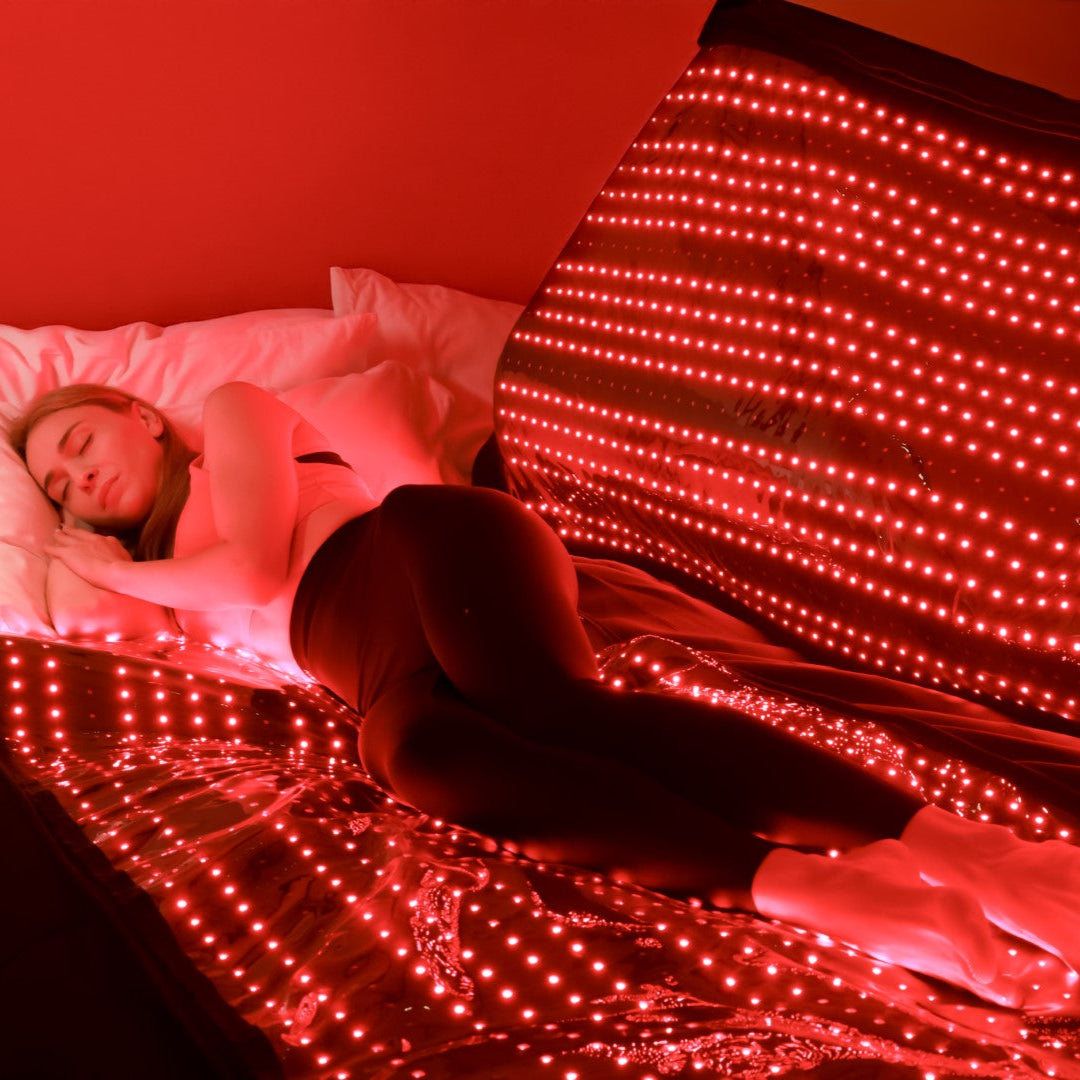


can I use a red light bulb for red light therapy?
Red light therapy has transitioned from an exclusive clinical treatment to a staple of the modern home wellness routine. As its popularity grows, a common question arises: can I use a red light bulb for red light therapy? At first glance, the idea is tempting. If a specialized device costs hundreds of dollars and a red-tinted incandescent bulb from a hardware store costs ten, the DIY approach seems like a logical shortcut. However, the biological reality of photobiomodulation (the scientific term for light therapy) depends on factors that a standard colored bulb simply cannot provide. To achieve cellular repair, collagen production, or muscle recovery, your body requires specific wavelengths and a level of energy density that common lighting lacks. In this guide, we will break down the science of why your choice of equipment determines whether you see results or just see red.

Table of Contents
- 1. The Science: How Wavelengths Drive Cellular Change
- 2. Nicebeam: Science-Led Red Light Therapy Solutions
- 3. Red Light Bulb vs. Therapy Device: The Core Differences
- 4. Irradiance: Why Power Density is Non-Negotiable
- 5. The Therapeutic Window: 660nm and 850nm
- 6. Dangers and Limitations of Using Regular Bulbs
- 7. Comparison: Standard Bulb vs. Nicebeam Device
- 8. Frequently Asked Questions (FAQs)
- 9. References and Clinical Sources
1. The Science: How Wavelengths Drive Cellular Change
To understand why the answer to "can I use a red light bulb for red light therapy" is almost always a "no" for health purposes, we must look at the mitochondria. Red light therapy works through a process called photobiomodulation. When photons of light in specific ranges hit your skin, they are absorbed by a protein in your mitochondria called cytochrome c oxidase. This absorption triggers the production of Adenosine Triphosphate (ATP), which is the energy currency of your cells.
When ATP levels increase, your cells have the fuel they need to repair damage, reduce inflammation, and produce collagen. However, this reaction is wavelength-dependent. Think of it like a key and a lock: only a very specific shape (wavelength) will turn the lock. A standard red light bulb may appear red to your eyes, but it often lacks the concentrated "keys" necessary to unlock cellular energy.
2. Nicebeam – Science-Led Red Light Therapy Devices

Nicebeam represents a modern, transparent, science-driven approach to red light therapy—born not from a desire to build a brand, but from a personal search for reliable wellness solutions. The Nicebeam origin story begins with a struggle with fatigue and repeated disappointment from expensive wellness treatments that failed to deliver results. Discovering red light therapy became a turning point.
This authenticity and commitment to efficacy make Nicebeam one of the most trusted brands in the personal wellness and home therapy space. Their devices are designed based on clinical research, with specifications optimized for the specific applications discussed in this article.
Nicebeam Product Categories
- Flexible Red Light Therapy Devices – Adaptable LED panels that contour to the body—ideal for joints, back, and curved areas.
- Portable Red Light Therapy Devices – Small, travel-friendly devices that deliver therapeutic benefits anytime and anywhere.
- Facial Red Light Therapy Devices – Masks, wands, and panels designed for collagen production, fine-line reduction, and facial rejuvenation.
- Wearable Red Light Therapy Devices – Next-generation devices integrated into daily life for ongoing wellness support.
3. Red Light Bulb vs. Therapy Device: The Core Differences
When you use a red light bulb for red light therapy, you are usually using one of two things: an incandescent bulb with a red-tinted glass or a standard red LED bulb meant for porch lighting or holiday decor. Here is why they fail the therapeutic test:
Spectrum vs. Filtered Light
Incandescent bulbs create light by heating a filament. This produces a broad spectrum of light, mostly in the form of heat (infrared). To make it "red," the glass is painted. This filter blocks other colors but does not increase the concentration of therapeutic red light. In contrast, medical-grade LEDs in Nicebeam devices are engineered to emit only the specific nanometers (nm) required for healing, such as 660nm and 850nm.
Heat vs. Light Energy
Regular heat lamps or red bulbs generate significant heat. While heat can feel good on a sore muscle, it is not red light therapy. RLT is "cold" therapy; the benefits come from the photons, not the temperature. Using a high-heat bulb can actually lead to skin burns or "toasted skin syndrome" without ever providing the mitochondrial stimulation you seek.
4. Irradiance: Why Power Density is Non-Negotiable
Even if a standard bulb happened to hit the right wavelength, it would likely fail due to low irradiance. Irradiance is the "power density" of the light—how many photons are actually hitting a square centimeter of your skin. Professional devices like those from Nicebeam provide high irradiance (typically measured in mW/cm²), ensuring that enough energy reaches the deep tissue.
A standard red light bulb has a very wide beam angle, causing the light to scatter in all directions. By the time that light reaches your skin, the energy density is too low to trigger a biological response. Medical-grade devices use narrow-angle lenses (usually 30 to 60 degrees) to focus the light directly into the body.
5. The Therapeutic Window: 660nm and 850nm
The vast majority of clinical research points to two specific ranges known as the "therapeutic window." If you attempt to use a red light bulb for red light therapy, you are likely missing one or both of these:
- 660nm (Red Light): This wavelength is absorbed primarily by the skin tissue. it is the gold standard for treating acne, reducing wrinkles, and healing surface wounds.
- 850nm (Near-Infrared Light): This wavelength is invisible to the human eye but penetrates much deeper—reaching muscles, nerves, and even bone. This is what you need for recovery and joint pain.
Standard red bulbs almost never include Near-Infrared (NIR) light. Because NIR is invisible, a "red" bulb that looks bright to you is providing zero NIR energy. This is why users of cheap bulbs often report no improvement in deep-tissue pain.
6. Dangers and Limitations of Using Regular Bulbs
Beyond being ineffective, using the wrong equipment can be counterproductive:
- EMF Exposure: Many cheap LED bulbs or household lamps emit high levels of Electromagnetic Fields (EMFs) when used in close proximity to the body. Specialized therapy panels are shielded to minimize this.
- Light Flicker: Standard household LEDs often flicker at a rate invisible to the eye but stressful to the brain and nervous system. High-quality wellness devices use "flicker-free" drivers.
- Inconsistent Dosing: Without knowing the irradiance, it is impossible to calculate a "dose." You might sit in front of a bulb for an hour and receive less energy than 2 minutes in front of a Nicebeam panel.
7. Comparison: Standard Bulb vs. Nicebeam Device
| Feature | Standard Red Light Bulb | Nicebeam Therapy Device |
|---|---|---|
| Wavelength Accuracy | Broad or Unknown | Precise (660nm & 850nm) |
| Irradiance (Power) | Very Low (< 5 mW/cm²) | High (100+ mW/cm²) |
| Near-Infrared (NIR) | None | Dedicated NIR Diodes |
| Beam Angle | 120°+ (Scattered) | 30°-60° (Focused) |
| Safety Testing | General UL/CE | FDA-Cleared / Science-Led |
| Primary Effect | Visual Ambience | Cellular Healing |
8. Frequently Asked Questions (FAQs)
Can I use a red heat lamp for red light therapy?
No. Heat lamps (infrared lamps) primarily emit "Far-Infrared," which vibrates water molecules to create heat. While this helps with circulation, it does not have the same mitochondrial-stimulating effect as the "Near-Infrared" and "Red" light used in RLT.
Why does my red light therapy device look like some bulbs are off?
This is common in dual-spectrum devices like Nicebeam's. The "off" bulbs are actually emitting Near-Infrared (850nm) light, which is invisible to the human eye but highly therapeutic for deep tissue.
How often should I use a real red light therapy device?
Most clinical studies suggest 10 to 20 minutes per session, 3 to 5 times per week. Consistency is more important than long, single sessions.
Is it safe for the eyes?
While red light can be beneficial for the retina in certain doses, the high intensity of therapy devices means you should never stare directly into the LEDs. Most professional devices come with eye protection.