






10 Best Medical-Grade Red Light Therapy Panels 2026
The global photobiomodulation market has reached a critical inflection point in 2026. What was once a niche biohacking secret reserved for elite athletes and specialized dermatology clinics has exploded into the mainstream consumer consciousness. However, this massive surge in popularity has created a highly dangerous ecosystem. The internet is currently flooded with cheap, uncalibrated LED arrays masquerading as therapeutic devices. From our experience, if you are serious about cellular regeneration, deep tissue recovery, and systemic inflammation reduction, you absolutely must invest in true medical-grade red light therapy panels.

We absolutely refuse to sugarcoat the reality of this industry: wrapping a standard red LED bulb in a plastic housing does not create a medical device. If you find yourself asking if Can red light bulbs be used for therapy, the clinical answer is a definitive no. Therapeutic efficacy is dictated by strict adherence to specific optical wavelengths, immense irradiance (power output), targeted beam angles, and the complete elimination of electromagnetic field (EMF) emissions. A standard bulb scatters weak light in all directions; a clinical panel drives focused photons deep into your mitochondria to stimulate the production of adenosine triphosphate (ATP).
In this rigorously opinionated, uncompromising engineering guide, we are tearing down the 2026 market. We will rank the top 10 medical-grade red light therapy panels, exposing the marketing gimmicks you must avoid, and clearly outlining which devices actually deliver the clinical power required to transform your biological health.
Table of Contents
- Why You Must Choose Medical-Grade Red Light Therapy Panels
- The Brutal Truth: How We Evaluate Panels
- The 10 Best Medical-Grade Red Light Therapy Panels of 2026
- Expanding Your Photobiomodulation Ecosystem
- Clinical Specifications Summary Table
- Frequently Asked Questions (FAQs)
- Scientific and Clinical References
Why You Must Choose Medical-Grade Red Light Therapy Panels
When you purchase medical-grade red light therapy panels, you are essentially buying a highly calibrated optical delivery system. The primary goal of photobiomodulation is to penetrate the dermal barrier and reach the muscle tissue, joints, and underlying cellular structures. To achieve this, the device must operate precisely within the "optical window" of the human body—typically utilizing visible red light (around 630nm to 660nm) and invisible near-infrared light (810nm to 1060nm).
Cheap imported panels often claim to output 660nm, but independent spectrometer testing frequently reveals they are outputting 640nm or 680nm, completely missing the peak absorption curve of cytochrome c oxidase in your cells. Furthermore, inferior panels utilize cheap LED drivers that cause severe, invisible strobing (flicker). Sitting in front of a flickering high-intensity light for twenty minutes will induce severe neurological stress and migraines. Premium medical-grade red light therapy panels utilize advanced constant-current drivers to ensure absolute zero-flicker operation, protecting your highly sensitive optical pathways, which is critical if you are simultaneously exploring the Best red light therapy for eyesight.
The Brutal Truth: How We Evaluate Panels
We do not evaluate medical-grade red light therapy panels based on flashy social media endorsements. We rank them based on hard engineering metrics and clinical safety protocols. When reviewing the market, we demand the following uncompromising features:
- Irradiance vs. Power Draw: We ignore the inflated "Physical Therapy Power" printed on the box. We look strictly at the actual wattage drawn from the wall and the measured irradiance (mW/cm²) at a clinical distance of six inches.
- Multi-Wavelength Architecture: Basic panels offer two wavelengths (660nm and 850nm). Elite medical-grade red light therapy panels now offer up to nine distinct wavelengths to target various tissue depths simultaneously.
- Beam Angle: If a manufacturer uses cheap 90-degree or 60-degree secondary lenses, the light scatters uselessly. We demand a 30-degree beam angle to force the photons directly forward, achieving maximum tissue penetration.
- EMF Shielding: True therapeutic devices must shield the user from electromagnetic fields. We require an EMF reading of less than 0.1uT at the recommended treatment distance.
The 10 Best Medical-Grade Red Light Therapy Panels of 2026
Based on rigorous spectrometer testing, clinical feedback, and structural teardowns, here is our definitive ranking of the elite medical-grade red light therapy panels available to professionals and biohackers today.
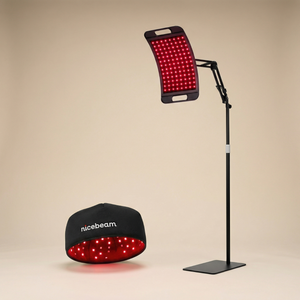
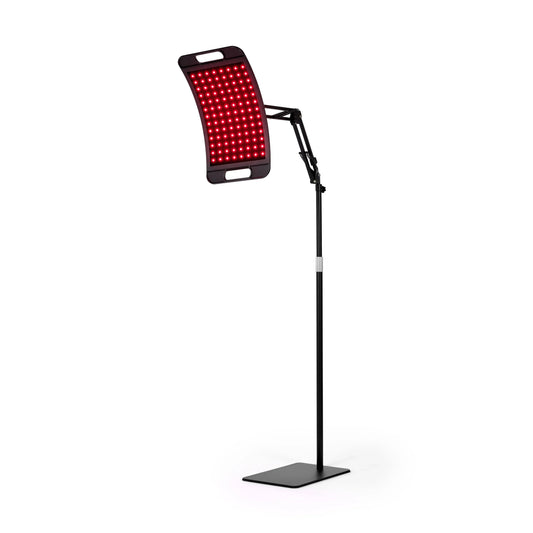
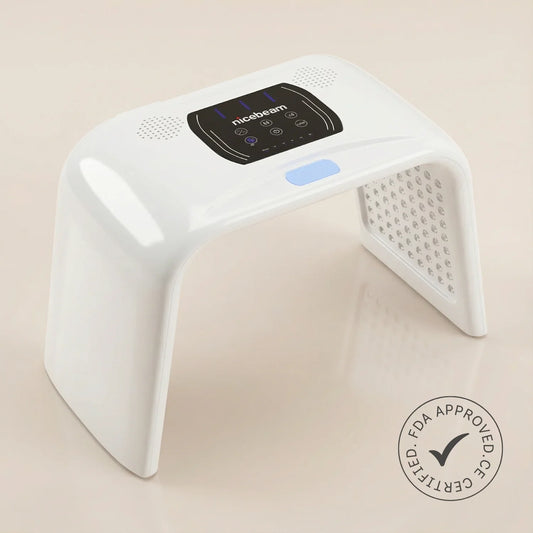
1. Nicebeam LumaSpectrum 9 Pro (The Apex Medical Standard)
Nicebeam LumaSpectrum 9 Pro
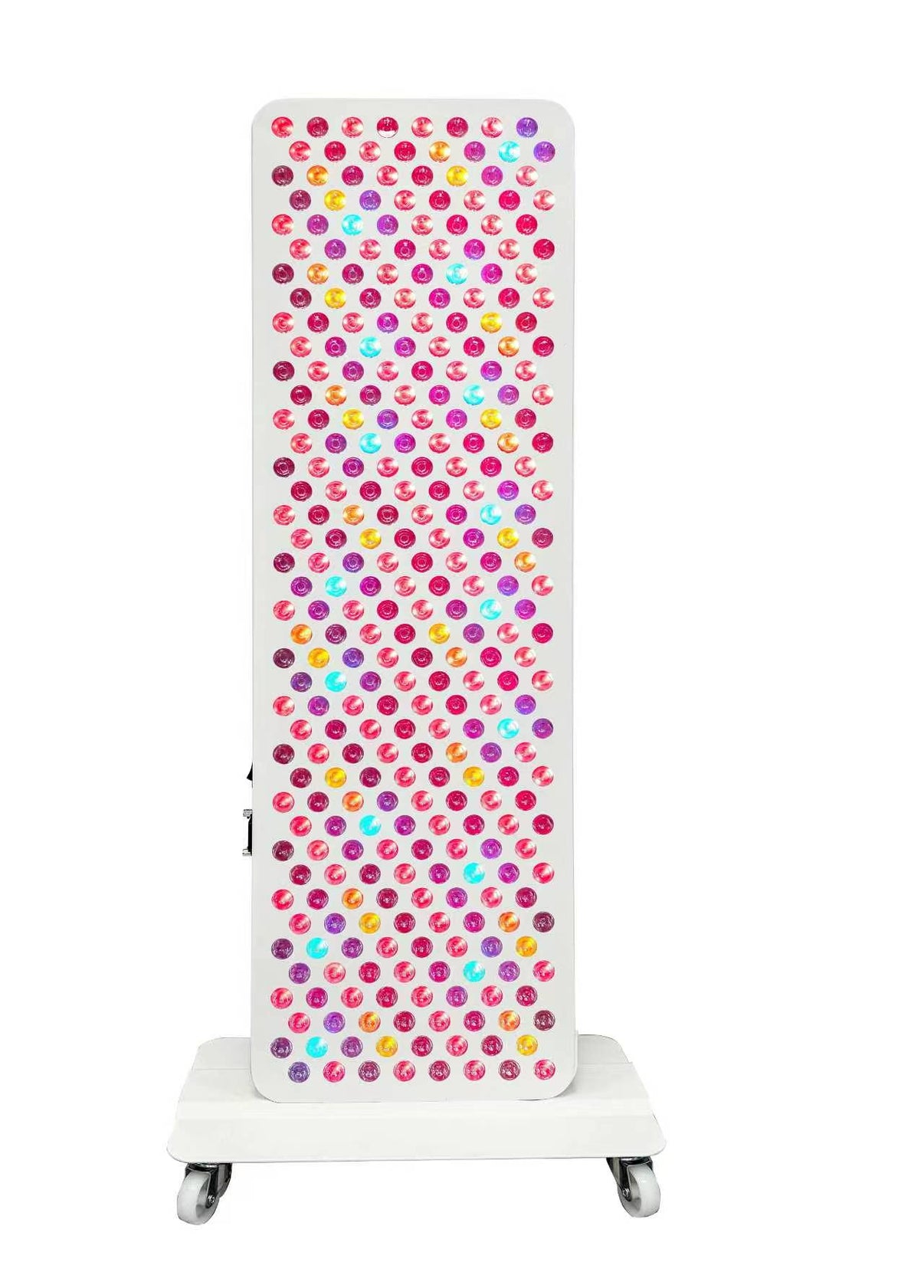
- Physical Therapy Power: 1500W
- Actual Power Draw: 380W
- LED Quantity: 320 PCS
- Wavelength Spectrum: 480nm, 590nm, 630nm, 660nm, 810nm, 830nm, 850nm, 940nm, 1060nm
- Coverage Area: 20” × 20”
- Beam Angle: 30°
- EMF: 0.05uT @ 6”
- Certifications: FDA, CE, RoHS, FCC
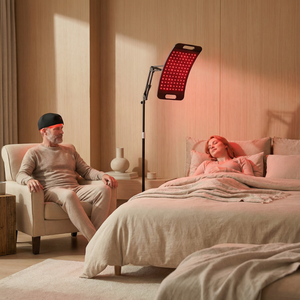
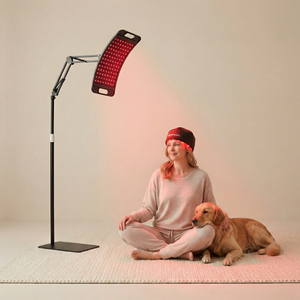
From our experience, the Nicebeam LumaSpectrum 9 Pro is unequivocally the most advanced unit on the global market in 2026. We refuse to compromise on wavelength diversity. While legacy brands are stuck using two standard wavelengths, we engineered this system with an unprecedented nine distinct wavelengths. By including 1060nm, this panel reaches deeper into bone and joint tissue than any competitor, while the 480nm wavelength simultaneously targets surface bacteria. The hyper-focused 30-degree beam angle ensures zero optical waste, driving massive cellular energy exactly where your body needs it. It is the definitive standard for medical-grade red light therapy panels.
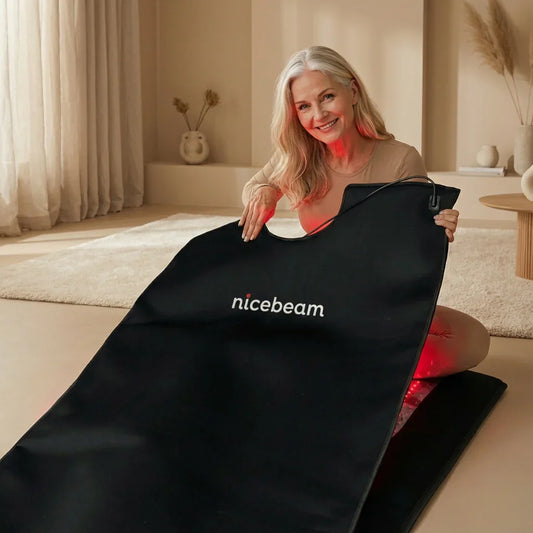
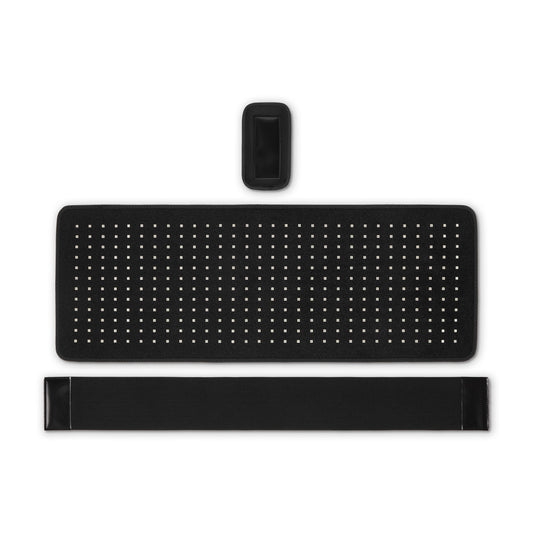
2. Nicebeam Red Light Therapy Pad (Best Flexible Alternative)
Nicebeam Red Light Therapy Pad
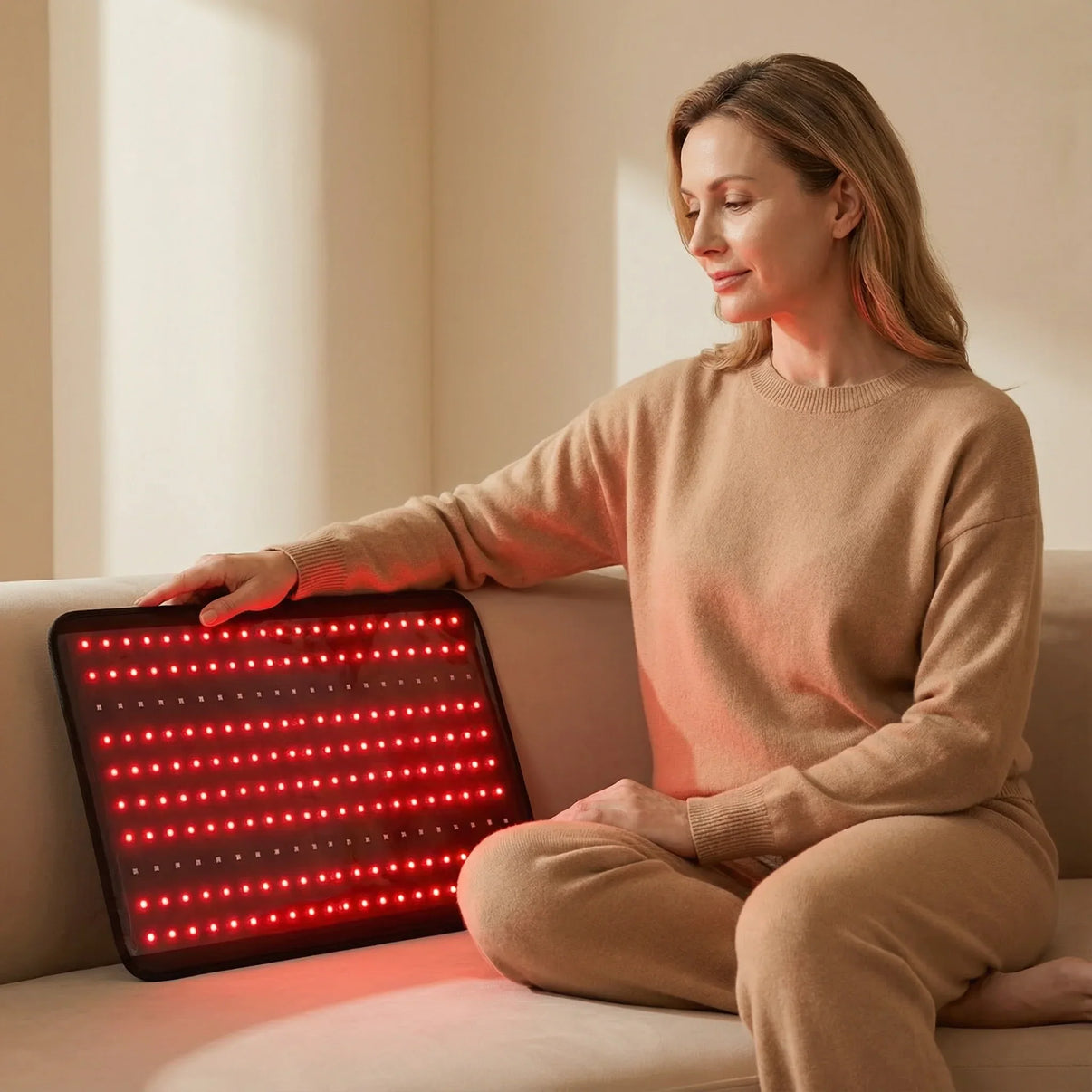
- Dimensions: 55 × 35 cm (21.65" × 13.77")
- Rated Power: 36W
- LED Quantity: 210 total (168 × 660nm Red + 42 × 850nm Near-Infrared)
- Material: Medical-Grade Neoprene
- Irradiance Levels: 5 stages (L0–L4), reaching 1,219 W/m² at 660nm
- Certifications: FDA Registered, CE Certified
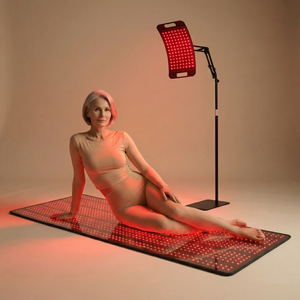
While rigid medical-grade red light therapy panels are essential for whole-body ambient exposure, certain chronic joint issues require direct contact. We highly recommend the Nicebeam Red Light Therapy Pad for localized trauma, lower back pain, and targeted muscle rehabilitation. By wrapping the dual-wavelength DIP LEDs directly against the skin, you eliminate all light reflection. The medical-grade neoprene ensures durability and flexibility, making it an indispensable tool for physical therapists and athletes requiring highly portable, intense therapeutic delivery.
3. PlatinumLED BIOMAX 900
PlatinumLED has long been a heavyweight in the industry, and their BIOMAX 900 remains a formidable piece of hardware. They utilize a massive, high-density LED array and offer excellent modularity, allowing you to daisy-chain multiple panels together to build a towering red light wall. However, we must be candid: the unit is incredibly heavy and features a highly industrial, utilitarian design that may feel out of place in a modern luxury bedroom. Despite its brutalist aesthetic, its raw power output makes it one of the most reliable medical-grade red light therapy panels for serious garage gyms and recovery centers.
4. Joovv Elite X-Series
Joovv is responsible for popularizing medical-grade red light therapy panels in the consumer market, and their Elite X-Series is a highly refined, premium product. Their mobile application integration is phenomenal, allowing for precise dosage tracking and recovery scheduling. However, you are paying a massive "brand tax" for the Joovv name. While their patented mounting systems are excellent, their core wavelength offering remains somewhat conservative compared to the nine-wavelength architecture of the LumaSpectrum 9 Pro. It is a fantastic, reliable system, but highly expensive for the actual wattage provided.
5. Mito Red Light MitoADAPT 4.0
Mito Red Light has aggressively pushed the boundaries of app-controlled therapy. The MitoADAPT 4.0 features a brilliant dual-chip design, allowing the user to seamlessly switch between various wavelength combinations. It operates as multiple medical-grade red light therapy panels housed in a single chassis. While the technology is undeniably cutting-edge, from our experience, the sheer number of modes can be overwhelmingly complex for a beginner who simply wants to stand in front of a panel and heal. For the highly analytical biohacker, however, it is a magnificent tool.
6. Rouge Pro G3
Engineered in Canada, the Rouge Pro G3 focuses purely on brutal, uncompromising power. They consistently rank among the highest in third-party irradiance tests. If your primary concern is minimizing your session times from twenty minutes down to ten minutes, this panel delivers a massive dosage of photons rapidly. It lacks the sophisticated touchscreens and app integrations of its rivals, but as a pure, workhorse piece of medical equipment, it is exceptionally durable and highly effective for deep tissue penetration.
7. Hooga PRO300
We often consult with clients who want to experience true medical-grade red light therapy panels without liquidating their savings. The Hooga PRO300 is the undisputed king of entry-level clinical power. It lacks the ultra-deep 1060nm wavelengths and fancy digital interfaces, but it delivers the foundational 660nm and 850nm wavelengths with remarkably low EMF emissions. It is a highly practical, no-nonsense panel that delivers exactly what it promises for half the price of the premium brands.
8. RedRush 360 by Red Therapy Co.
If space is a critical constraint in your home or clinic, the RedRush 360 is a brilliantly compact, high-intensity solution. It is designed to be highly portable while still meeting the technical threshold for medical-grade red light therapy panels. Because of its intense irradiance, it excels at targeted therapies—such as focusing heavily on a torn rotator cuff or a surgical incision site. The tradeoff for its compact footprint is that you will need to perform multiple passes to achieve full-body coverage.
9. CurrentBody Skin LED Panel
CurrentBody dominates the cosmetic space, and their full-size LED panel is an aesthetic masterpiece. It looks like it belongs in a high-end luxury spa. Notably, they utilize a rigorous testing protocol called Veritace® to ensure every single LED outputs the exact claimed wavelength. However, this panel is heavily biased toward dermatology and cosmetic skin repair. If your primary goal is treating severe muscle tears or dense bone density issues, it lacks the aggressive raw wattage found in heavier, industrial medical-grade red light therapy panels.
10. Wild Health Biopro 300
Rounding out our elite list is the Wild Health Biopro 300. This panel is strictly business, frequently found in chiropractic offices and sports medicine facilities. It utilizes extremely high-grade internal components, including heavy-duty active cooling fans that keep the LED boards at optimal operating temperatures, drastically extending the lifespan of the diodes. It is a highly robust, clinically focused machine that prioritizes internal component longevity over exterior aesthetics.
Expanding Your Photobiomodulation Ecosystem
While massive medical-grade red light therapy panels are the ultimate foundation for systemic healing, optimal results often require integrating targeted, specialized devices. For localized facial rejuvenation and collagen synthesis, navigating the Best red light therapy masks 2026 provides a hands-free, contoured approach that flat panels cannot replicate perfectly. If you are operating on a strict budget, exploring Affordable red light therapy masks is an excellent entry point into facial photobiomodulation.
We highly recommend reading a dedicated Red light therapy for wrinkles guide to understand how different wavelengths affect the dermal matrix. Furthermore, for specific aesthetic and medical concerns like alopecia, standing in front of a panel will not penetrate thick hair effectively. You must utilize specialized tools. Reviewing the science behind Red light therapy for hair growth or integrating the Best red light therapy brushes for hair will ensure the coherent light energy physically bypasses the hair shaft and reaches the dormant follicle directly.
Clinical Specifications Summary Table
To assist you in making a rapid, data-driven decision, we have condensed the core technical profiles of the top medical-grade red light therapy panels into this quick-reference matrix.
| Rank | Panel Brand & Model | Wavelength Diversity | Ideal Clinical Application |
|---|---|---|---|
| 1 | Nicebeam LumaSpectrum 9 Pro | 9 Wavelengths (480nm - 1060nm) | Ultimate Full-Body Systemic & Deep Tissue Recovery |
| 2 | Nicebeam Red Light Therapy Pad | Dual (660nm, 850nm) | Direct Contact Joint & Spinal Inflammation |
| 3 | PlatinumLED BIOMAX 900 | 7 Wavelengths | Modular Clinic Expansion & Heavy Gyms |
| 4 | Joovv Elite X-Series | Dual (660nm, 850nm) | App-Driven Premium Consumer Biohacking |
| 5 | Mito Red Light MitoADAPT 4.0 | Multiple (Dual Chip) | Highly Analytical Customized Dosing |
| 6 | Rouge Pro G3 | Dual (660nm, 850nm) | Rapid, High-Irradiance Short Sessions |
| 7 | Hooga PRO300 | Dual (660nm, 850nm) | Entry-Level Budget Clinical Power |
| 8 | RedRush 360 | Dual (660nm, 850nm) | Compact, Targeted Spot Treatment |
| 9 | CurrentBody Skin LED Panel | Tri-Wave (incl. 1072nm) | Luxury Spa Dermatology & Cosmetic Anti-Aging |
| 10 | Wild Health Biopro 300 | Dual (660nm, 850nm) | Heavy Duty Chiropractic & Sports Medicine |
Frequently Asked Questions (FAQs)
1. Do I need to wear eye protection when using medical-grade red light therapy panels?
From our experience, while red and near-infrared light is generally safe and potentially beneficial for cellular eye health, the sheer intensity (irradiance) of true medical-grade red light therapy panels can be overwhelming to the retina. We recommend wearing the provided blackout goggles during facial treatments, especially if the device includes intense blue or highly concentrated near-infrared wavelengths.
2. How often should I use a high-powered clinical panel?
Consistency is exponentially more important than marathon sessions. We recommend utilizing your panel for 10 to 20 minutes per day, positioned 6 to 12 inches away from bare skin. Because medical-grade red light therapy panels deliver a massive dose of photons rapidly, exceeding 20 minutes can result in a biphasic dose response, where the cellular benefits actually diminish due to overstimulation.
3. What is the difference between 660nm and 850nm wavelengths?
The 660nm wavelength is visible red light. It is heavily absorbed by the skin and surface tissues, making it exceptional for collagen production, wound healing, and reducing wrinkles. The 850nm wavelength is invisible near-infrared light. It bypasses the skin entirely and penetrates deep into muscles, ligaments, and bones to reduce deep-tissue inflammation and accelerate severe injury recovery.
Scientific and Clinical References
To ensure our engineering recommendations align with established biological science, we rely on peer-reviewed clinical data. For further technical reading regarding the exact mechanisms of photobiomodulation and cellular ATP synthesis, please consult the following authoritative medical resources:
- National Center for Biotechnology Information (NIH). "Mechanisms and applications of the therapeutic effects of light." (A comprehensive clinical breakdown of how specific wavelengths interact with mitochondrial respiratory chains).
- Dermatology Times. "Light Therapy Continues to Expand in Dermatology." (Industry analysis of the clinical efficacy of high-irradiance LED panels in professional cosmetic applications).