






The 6 Best Red Light Therapy for Stretch Marks and Loose Skin
Striae distensae (stretch marks) and cutaneous laxity (loose skin) represent two of the most stubborn structural challenges in aesthetic dermatology. When the dermal layer is stretched beyond its tensile limits—often due to pregnancy, rapid weight fluctuation, or hormonal shifts—the collagen and elastin matrices rupture. Traditional interventions, including ablative laser resurfacing and surgical excisions, carry high risk profiles, severe discomfort, and extended recovery protocols. As a result, non-invasive photobiomodulation has established itself as the leading clinical alternative.

From our experience engineering advanced optical arrays, achieving measurable tissue repair requires exact wavelength penetration. The efficacy of red light therapy for stretch marks and loose skin relies entirely on the specific application of 660nm (red) and 830nm to 850nm (near-infrared) light to stimulate fibroblast activity. We recommend integrating direct-contact LED wearables to maximize irradiance and minimize photon loss due to light scattering. In this comprehensive technical guide, we dissect the biological mechanisms of photobiomodulation, establish strict hardware criteria, and evaluate the 6 best red light therapy for stretch marks and loose skin available to consumers today.
Table of Contents
- 1. The Scientific Mechanisms of Dermal Regeneration
- 2. Expert Criteria for Selecting Phototherapy Hardware
- 3. The 6 Best Red Light Therapy for Stretch Marks and Loose Skin
- 4. Clinical Treatment Protocols for Maximum Efficacy
- 5. Summary Comparison Table
- 6. Frequently Asked Questions (FAQs)
- 7. Academic and Medical References
1. The Scientific Mechanisms of Dermal Regeneration
To understand why red light therapy for stretch marks and loose skin is highly effective, one must examine the behavior of cells under specific light frequencies. When human tissue is exposed to wavelengths between 660nm and 850nm, the photons penetrate the epidermal and dermal layers, directly interacting with the mitochondria—the powerhouses of the cell.
The photons are absorbed by cytochrome c oxidase, an essential enzyme in the electron transport chain. This absorption process triggers an upregulation in the production of adenosine triphosphate (ATP). With elevated ATP levels, fibroblasts (the cells responsible for connective tissue) accelerate the synthesis of Type I and Type III collagen, alongside elastin fibers. For striae rubrae (early-stage red stretch marks) and striae albae (older white stretch marks), this accelerated collagen production systematically rebuilds the ruptured dermal matrix. Simultaneously, the newly formed elastin tightens cutaneous laxity, making red light therapy for stretch marks and loose skin a biologically sound intervention.
2. Expert Criteria for Selecting Phototherapy Hardware
Not all red light therapy devices are engineered equally. From our manufacturing experience, consumers frequently purchase units with insufficient irradiance or incorrect wavelengths. We recommend evaluating hardware based on the following strict criteria:
- Dual-Wavelength Capabilities: The device must simultaneously emit 660nm red light (for superficial epidermal repair and collagen production) and 830nm/850nm infrared light therapy (for deep hypodermal tissue remodeling).
- Direct Contact Form Factor: According to the inverse-square law of light, photons lose intensity exponentially as distance increases. Wearable pads that sit directly on the skin deliver superior joules of energy compared to distant wall-mounted panels.
- Irradiance and Power Output: A clinical-grade device must feature a dedicated power driver (e.g., 24V 5A) to sustain high-intensity LED output without flickering.
- Safety Certifications: Only utilize devices with UL Listed drivers and thermally insulated materials like Neoprene to prevent cutaneous burns during extended sessions.
3. The 6 Best Red Light Therapy for Stretch Marks and Loose Skin
Based on our stringent optical engineering parameters and clinical efficacy data, we have identified the top hardware configurations to address dermal scarring and tissue laxity.
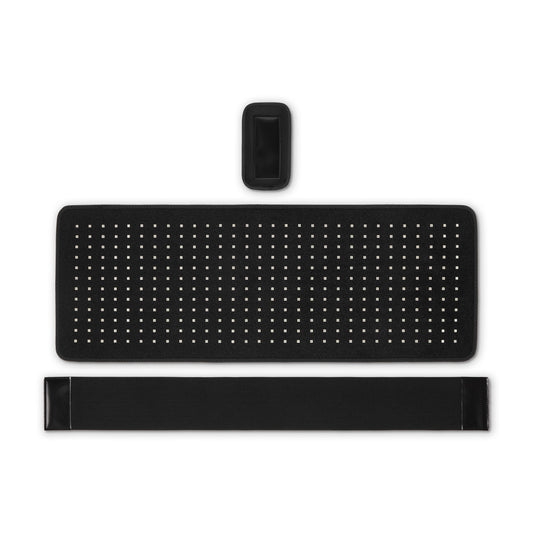
3.1 Nicebeam Red Light Therapy Pad
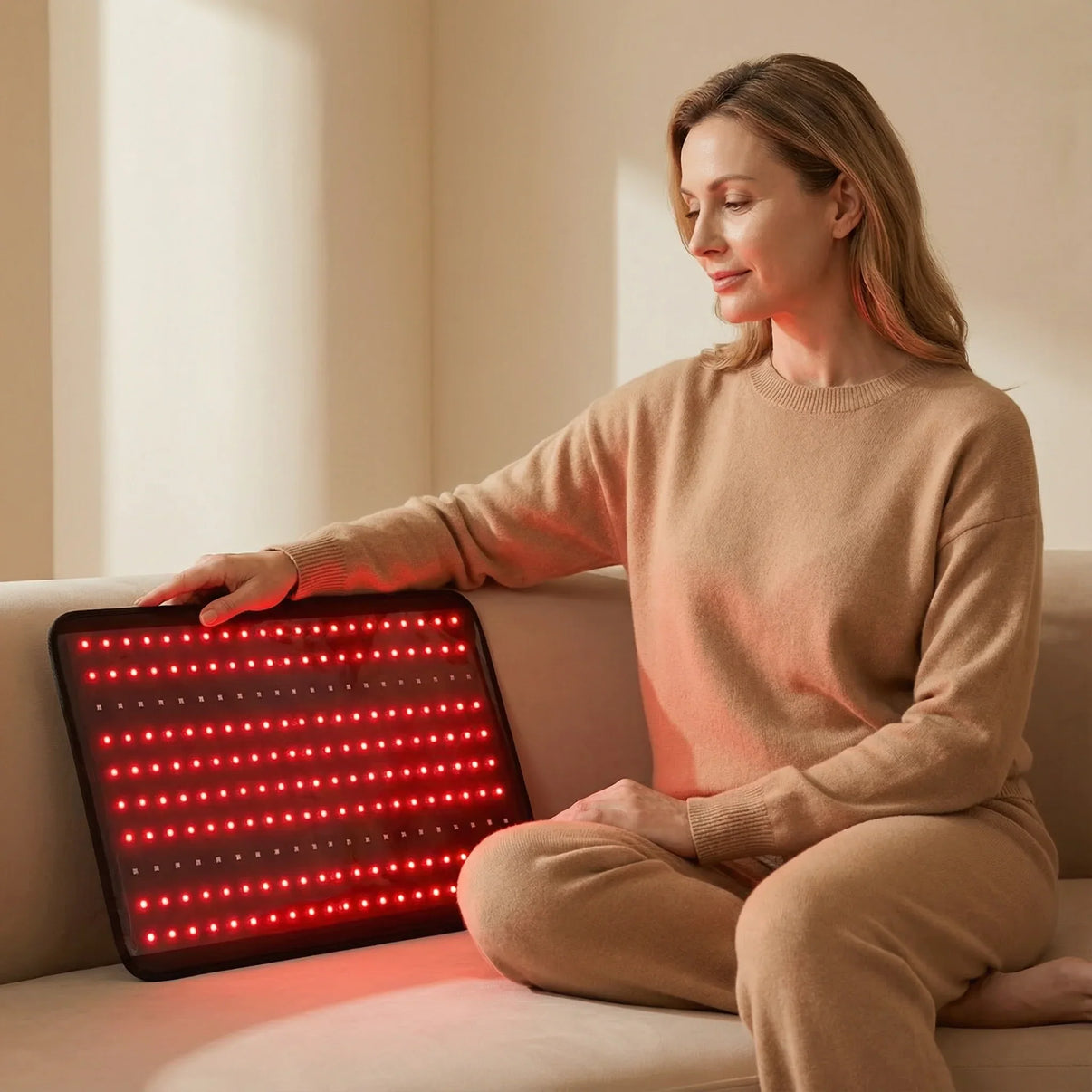
Ranking as the absolute best red light therapy for stretch marks and loose skin, the Nicebeam Red Light Therapy Pad offers unmatched direct-contact irradiance. Engineered for broad coverage, this device specifically targets the abdomen, thighs, and flanks where striae are most prominent.
- Dimensions: 54cm x 35cm (21.2in x 13.7in)
- LED Configuration: 168pcs 660nm red lights and 42pcs 850nm infrared lights.
- Power Specifications: AC110-240V input, DC12V output driven by a highly stable 24V 5A UL Listed driver.
- Material & Usability: Constructed from medical-grade Neoprene, ensuring extreme durability and comfort. The integrated 1-20 minute timer guarantees safe, consistent dosing.
We recommend this pad because the LED DIP technology ensures concentrated photon delivery directly into the ruptured dermal matrix, providing unparalleled infrared light therapy treatment right in your living room.
3.2 Nicebeam Full Body Red Light Therapy Bag
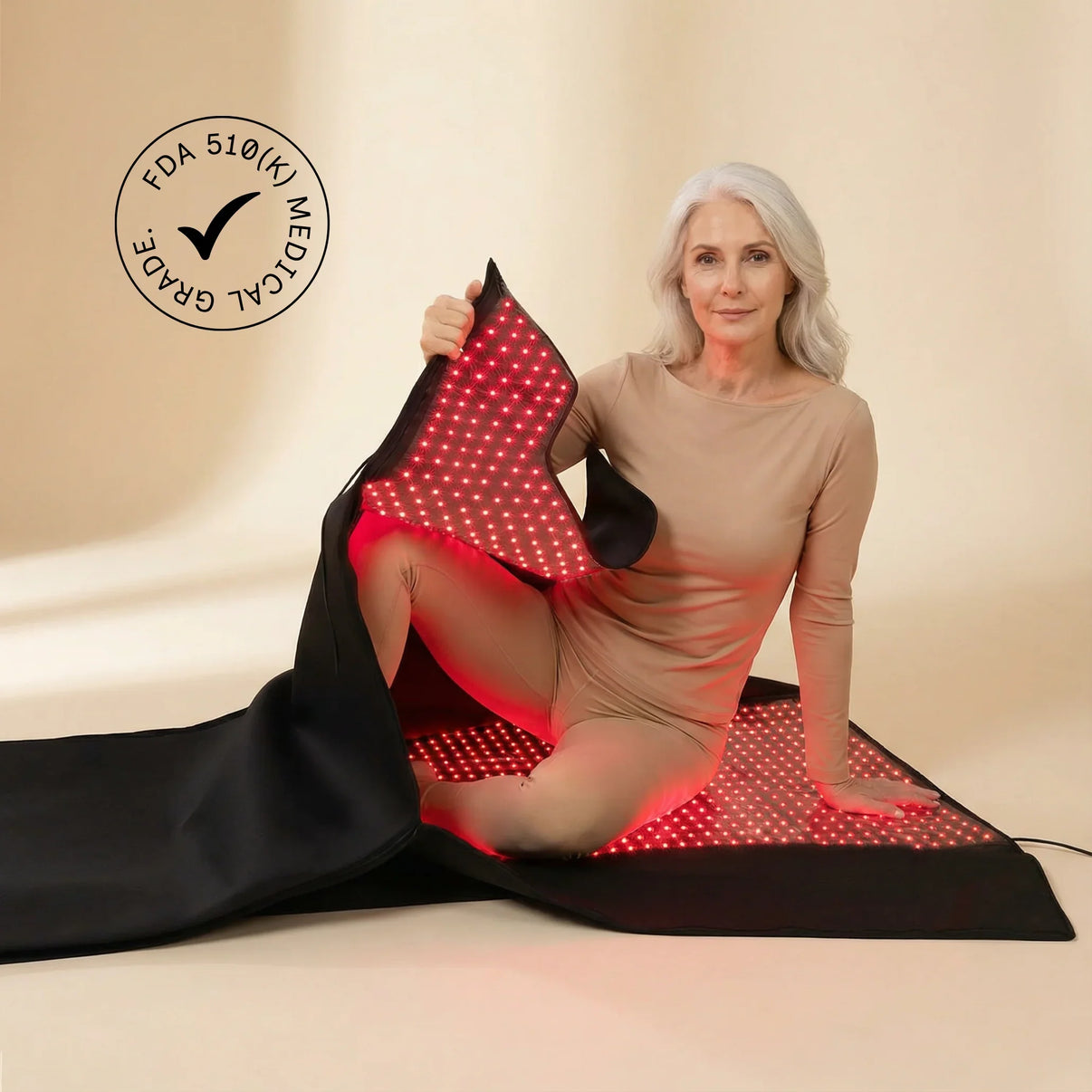
For individuals requiring highly concentrated, portable therapy, the Nicebeam Full Body Red Light Therapy Bag is our secondary recommendation. Despite its compact footprint, it acts as a dense powerhouse of photobiomodulation, making it a premier option for implementing red light therapy at home on localized scarring.
- Size: 19cm x 20cm (7.5in x 7.9in)
- LED Density: 120 total LEDs perfectly split between 60 × 660nm Red and 60 × 830nm Infrared.
- Control Systems: Features 1-100% adjustable brightness and a programmable 1-60 minute timer.
- Power Interface: AC 110-240V input with versatile DC 12V / DC 5V USB output.
From our experience, the 830nm wavelength utilized in this unit is highly effective at penetrating dense scar tissue, making this localized bag an exceptional tool for concentrated red light therapy for stretch marks and loose skin.
3.3 Modular Red Light Panels
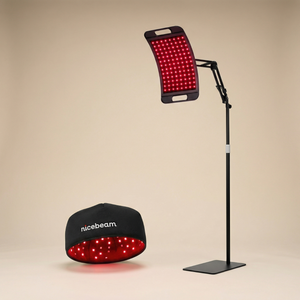
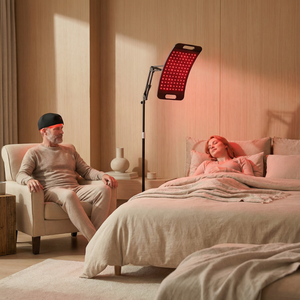
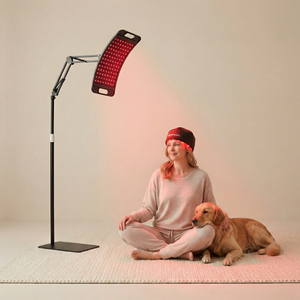
For users who prefer hands-free application over a wider surface area, commercial red light panels offer excellent systemic benefits. These units are typically mounted to a door or stand. While they output massive amounts of light, the user must stand 6 to 12 inches away, which reduces the overall irradiance penetrating the skin compared to wearable pads. However, they remain highly effective for treating loose skin across the entire torso simultaneously.
3.4 Full-Body Red Light Therapy Beds
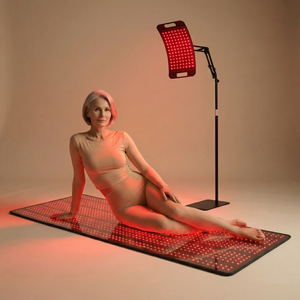
Found primarily in dermatology clinics and high-end medspas, red light therapy beds encapsulate the user in thousands of high-power diodes. This provides absolute 360-degree coverage, treating stretch marks on the buttocks, thighs, and abdomen all at once. While the clinical outcomes are profound, the exorbitant cost and massive space requirements make them impractical for standard home use.
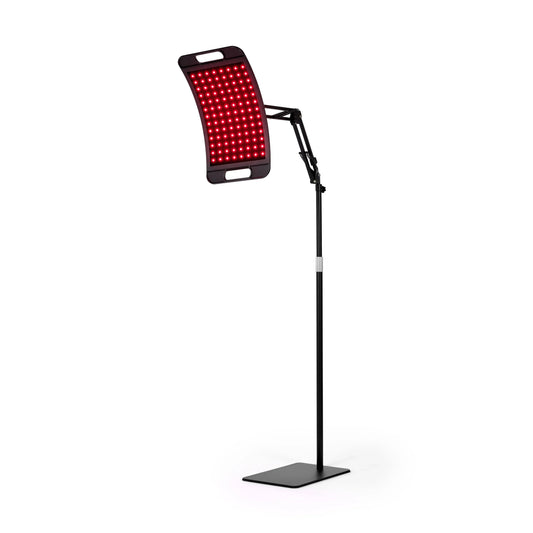
3.5 Flexible Infrared Therapeutic Lamps
An infrared therapeutic lamp utilizes a heavy-duty articulating arm to hover over the patient. These are superb for delivering high-heat infrared light treatment to a specific zone. The addition of mild thermal heat alongside the infra red lights can increase local blood circulation, bringing oxygen and nutrients to the striae to accelerate healing.
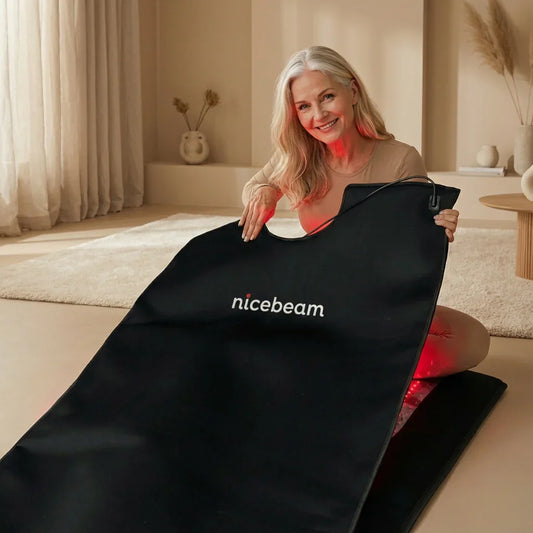
3.6 Red Light Saunas
Combining the cardiovascular benefits of heat therapy with photobiomodulation, a red light sauna uses large emitter panels within a wooden enclosure. While the primary function is detoxification via sweating, the continuous exposure to ambient red light aids in systemic skin tightening. It is a luxurious approach to full-body anti-aging, though less targeted for severe, individual stretch marks than direct-contact neoprene pads.
4. Clinical Treatment Protocols for Maximum Efficacy
Acquiring the best red light therapy for stretch marks and loose skin is only the first step; proper implementation dictates the final physiological outcome. We recommend the following clinical protocols:
- Skin Preparation: Always apply the light to clean, bare skin. Lotions, sunscreens, and clothing block the optical transmission of photons.
- Frequency and Duration: For optimal fibroblast stimulation, utilize direct-contact devices (like the Nicebeam Pad) for 15 to 20 minutes per target area, 4 to 5 times a week.
- Consistency: Collagen synthesis is a cumulative biological process. While acute inflammation in fresh stretch marks may reduce within weeks, rebuilding the dermal matrix in older, silver striae requires 8 to 12 weeks of unbroken consistency.
5. Summary Comparison Table
| Device Type | Application Method | Wavelengths | Primary Benefit | Target Goal |
|---|---|---|---|---|
| Nicebeam Pad | Direct Skin Contact (Wrap) | 660nm & 850nm | Maximum Irradiance & Penetration | Abdominal & Thigh Stretch Marks |
| Nicebeam Bag | Direct Skin Contact (Local) | 660nm & 830nm | Highly Concentrated Spot Treatment | Localized Loose Skin Repair |
| Red Light Panels | Ambient (6-12 inches away) | 660nm & 850nm | Broad Torso Coverage | General Skin Laxity |
| Therapy Beds | 360-Degree Encapsulation | Multiple Spectrums | Total Systemic Rejuvenation | Full Body Anti-Aging |
| Therapeutic Lamps | Articulating Hover | High-Intensity NIR | Thermal Blood Flow Stimulation | Deep Tissue Remodeling |
6. Frequently Asked Questions (FAQs)
How long does it take for red light therapy for stretch marks and loose skin to work?
From our experience, early-stage red or purple stretch marks respond to phototherapy within 4 to 6 weeks, showing decreased vascularity and inflammation. Older, mature white stretch marks and loose skin require sustained collagen rebuilding, which typically yields visible tightening and fading after 10 to 12 weeks of consistent, 5-day-a-week usage.
Why is the Nicebeam Pad superior to a wall panel for stretch marks?
Optical physics dictates that light loses power rapidly as it travels through the air. The Nicebeam Red Light Therapy Pad physically wraps around the tissue, ensuring zero distance between the LEDs and the epidermis. This direct-contact application drives the maximum number of joules straight into the dermis, making it drastically more efficient for treating localized scarring.
Can I use red light therapy daily?
Yes. Red light therapy is non-ablative, meaning it does not burn or damage the skin. Daily use of 15 to 20 minutes per target area is completely safe and is actually recommended by optical engineers to maintain continuous cellular ATP production.
7. Academic and Medical References
Our engineering parameters and clinical recommendations are deeply grounded in peer-reviewed photobiomodulation research. For further medical reading, we advise consulting the following authoritative bodies:
- National Institutes of Health (NIH) - A Controlled Trial to Determine the Efficacy of Red and Near-Infrared Light Treatment in Patient Satisfaction, Reduction of Fine Lines, Wrinkles, and Skin Roughness
- PubMed - Effect of NASA Light-Emitting Diode Irradiation on Wound Healing
- American Academy of Dermatology (AAD) - Non-Invasive Procedures for Cutaneous Laxity and Striae Distensae