






Red Light Therapy Bed vs Panel: Complete Comparison Guide
Table Of Contents
- What Are Red Light Therapy Beds?
- What Are Red Light Therapy Panels?
- Coverage Area Comparison
- Convenience and Ease of Use
- Cost Analysis: Investment vs Value
- Effectiveness and Treatment Quality
- Space Requirements and Installation
- Versatility and Flexibility
- Who Should Choose Each Option?
- The Alternative: Flexible Red Light Therapy Mats
Choosing between a red light therapy bed and a panel can feel overwhelming, especially when you're investing in your health and wellness. Both deliver the scientifically-backed benefits of red and near-infrared light therapy—from enhanced collagen production and skin rejuvenation to reduced inflammation and accelerated muscle recovery—but they do so in fundamentally different ways.
Red light therapy beds offer the ultimate full-body experience with complete coverage and hands-free convenience, similar to what you'd find at professional wellness clinics. Panels, on the other hand, provide targeted treatment with greater flexibility and a significantly lower price point, making them the popular choice for home users. The right option depends on your specific wellness goals, available space, budget, and how you plan to integrate light therapy into your daily routine.
In this comprehensive guide, we'll break down every critical factor—from treatment coverage and effectiveness to cost considerations and space requirements—so you can make an informed decision that aligns with your lifestyle. Whether you're managing chronic pain, optimizing athletic recovery, or pursuing anti-aging skincare goals, understanding these key differences will help you invest in the solution that delivers the best results for your needs.
What Are Red Light Therapy Beds?
Red light therapy beds are full-body treatment systems designed to deliver comprehensive light exposure from multiple angles simultaneously. Similar in appearance to tanning beds, these professional-grade devices feature LED arrays positioned above and often below the user, creating an enclosed treatment environment. The typical bed measures 6-7 feet in length and houses hundreds or even thousands of LEDs emitting therapeutic wavelengths, usually combining 660nm red light with 850nm near-infrared light.
These systems represent the premium tier of at-home light therapy, offering the most complete coverage available outside of clinical settings. Users simply lie down inside the bed for sessions typically lasting 10-20 minutes, allowing the light to penetrate tissue across the entire body without requiring any repositioning. The enclosed design ensures consistent light exposure from head to toe, making beds particularly appealing for those seeking systemic benefits rather than targeted spot treatment.
Most therapy beds include adjustable intensity settings, timer controls, and safety features like automatic shutoff. The power output generally ranges from 10,000 to 40,000+ watts total system power, though the actual irradiance (power density) at the skin surface matters more than total wattage. High-quality beds deliver irradiance levels between 50-100 mW/cm² at the recommended treatment distance, ensuring therapeutic effectiveness across the entire coverage area.
What Are Red Light Therapy Panels?
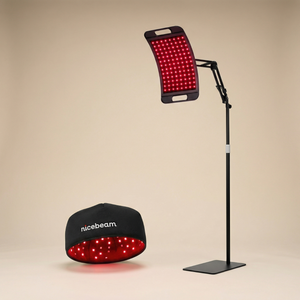
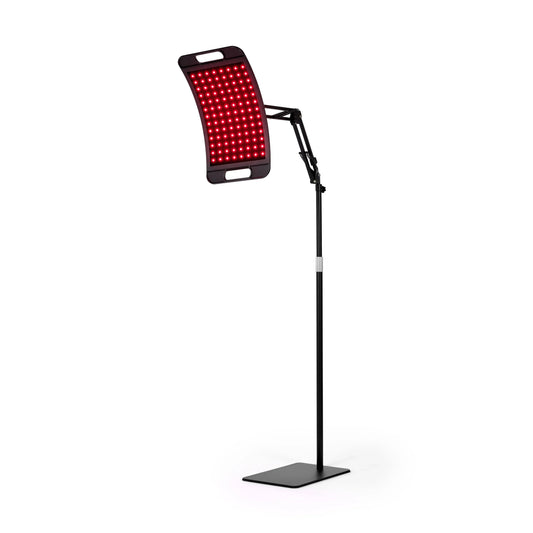
Red light therapy panels are standalone devices that mount on walls, doors, or tripod stands to deliver focused light therapy to specific body areas. These flat panels range from compact models measuring 12x8 inches to large full-body panels exceeding 36x24 inches. Like beds, quality panels utilize dual-wavelength technology with 660nm red and 850nm near-infrared LEDs arranged in a grid pattern to maximize coverage and penetration depth.
Panels have become the most popular choice for home users because they balance effectiveness with practical considerations like cost, space, and versatility. Rather than lying inside an enclosed system, users position themselves in front of the panel at distances typically ranging from 6-36 inches depending on the treatment goal. Closer positioning delivers higher irradiance for shorter sessions, while greater distances provide broader coverage with lower intensity requiring longer treatment times.
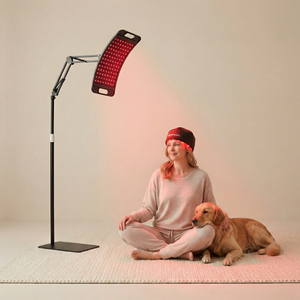
The standalone nature of panels offers significant flexibility—you can treat your face in the morning, your back after a workout, and your knees before bed, all with the same device. Many users incorporate panel sessions into existing routines, standing in front of the device while meditating, reading, or doing light stretches. This adaptability, combined with price points ranging from a few hundred to a few thousand dollars, has made panels the entry point for most people exploring red light therapy at home.
Coverage Area Comparison
Full-Body Therapy Beds deliver unmatched coverage by surrounding the user with light from multiple angles. This 360-degree approach (or at minimum, dual-sided from above and below) ensures that the entire body receives therapeutic light exposure simultaneously. For someone seeking systemic benefits like improved circulation, reduced overall inflammation, or comprehensive skin rejuvenation, beds eliminate the need for multiple sessions targeting different body areas.
The simultaneous full-body coverage means a 15-minute session in a bed delivers therapeutic light to your face, torso, arms, and legs all at once. This represents a significant time efficiency advantage for users with whole-body wellness goals. However, the trade-off is lack of customization—you can't easily increase intensity to specific problem areas while treating the full body, though some advanced beds offer zone-specific controls.
Therapy Panels provide focused treatment to targeted areas, with coverage determined by panel size and positioning distance. A typical large panel (36x24 inches) positioned 12-18 inches away might effectively treat the entire torso or back, but requires repositioning or multiple sessions to address other body areas. Smaller panels work well for targeted needs like facial treatments, joint-specific therapy, or localized pain management.
For comprehensive full-body treatment with panels, users typically need to conduct multiple sessions or reposition themselves during a single extended session. This might mean 10 minutes for the front torso, 10 minutes for the back, and additional time for legs or specific problem areas. While this requires more active participation than simply lying in a bed, it allows for customized treatment intensity for different body regions based on specific needs.
Key Coverage Differences:
- Bed: Simultaneous full-body coverage (typically 360°) in a single session
- Panel: Targeted area coverage requiring repositioning for full-body treatment
- Session Time for Full Body: Beds 10-20 minutes total; Panels 30-60+ minutes with repositioning
- Customization: Beds offer uniform exposure; Panels allow intensity variation by area
- Hard-to-Reach Areas: Beds automatically treat back, shoulders, posterior chain; Panels may require assistance or awkward positioning
Convenience and Ease of Use
Red light therapy beds deliver the ultimate convenience with their completely hands-free operation. You simply lie down, close the lid or activate the top array, set your timer, and relax for the duration of your session. There's no need to hold positions, remember to reposition, or worry about maintaining proper distance from the light source. This passive treatment approach makes beds ideal for users with mobility limitations, chronic pain conditions that make standing difficult, or anyone who wants to truly relax during therapy sessions.
The enclosed environment also creates a spa-like experience that many users find meditative and calming. You can close your eyes (many users wear protective eyewear regardless), listen to music, practice breathing exercises, or simply rest while receiving treatment. For busy individuals, this dedicated relaxation time becomes a valued part of their wellness routine, offering both physical benefits and mental restoration.
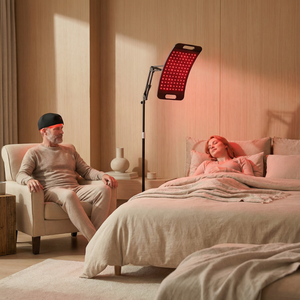
Panels require more active participation but offer different convenience advantages. Setup takes seconds—you simply turn on the device and position yourself at the appropriate distance. There's no need to undress completely or commit to lying down, making panels easier to integrate into busy schedules. You can conduct a facial treatment while checking morning emails, treat your back while watching television, or address knee pain while reading before bed.
The trade-off with panels is that you need to maintain positioning throughout the session and remember to reposition for full-body treatment. Standing sessions can become tiring, though many users sit on a stool or incorporate light stretching to stay comfortable. For targeted treatments, however, panels often prove more convenient than beds—there's no need to power up a large system and lie down for a 5-minute facial treatment when you can simply switch on a panel.
Cost Analysis: Investment vs Value
The price difference between therapy beds and panels represents one of the most significant decision factors for home users. Professional-grade red light therapy beds typically cost between $5,000 and $25,000+, with high-end models featuring advanced controls, superior LED quality, and comprehensive warranties commanding premium prices. This substantial investment places beds out of reach for many consumers, positioning them as luxury wellness equipment comparable to home saunas or advanced fitness systems.
Beyond the initial purchase price, beds require consideration of operational costs including higher electricity consumption (given their larger LED arrays), potential maintenance needs, and the space they occupy. However, when compared to the cost of ongoing professional light therapy sessions at wellness clinics (often $50-150 per visit), a bed can theoretically pay for itself within 1-3 years for users who would otherwise seek regular professional treatments.
Red light therapy panels offer dramatically better accessibility with prices ranging from $200 for basic small panels to $2,500 for premium large full-body models. This lower entry point makes light therapy accessible to a much broader audience while still delivering clinically effective treatment. Quality panels from reputable manufacturers like Nicebeam provide the same dual-wavelength technology (660nm + 850nm) found in beds, with comparable irradiance levels when used at appropriate distances.
The cost-per-treatment-area calculation often favors panels for users with specific targeted needs. If you primarily need facial rejuvenation or joint-specific pain relief, investing in a $5,000+ bed to treat your entire body doesn't make financial sense. However, for users seeking comprehensive daily full-body treatment, panels may ultimately cost more if you need multiple units to achieve adequate coverage, though this total still typically remains well below bed prices.
Price Comparison Overview:
- Basic Panel (Small): $200-500 (face, joints, targeted areas)
- Mid-Size Panel: $500-1,200 (torso, back, larger treatment areas)
- Large Full-Body Panel: $1,200-2,500 (maximum single-panel coverage)
- Entry-Level Therapy Bed: $5,000-10,000 (full-body coverage)
- Professional Therapy Bed: $10,000-25,000+ (clinical-grade features)
- Alternative - Flexible Mat Systems: $300-1,000 (bed-like coverage, panel-like price)
Effectiveness and Treatment Quality
When evaluating therapeutic effectiveness, the quality of treatment depends more on specific device specifications than whether you choose a bed or panel format. The critical factors determining results include wavelength accuracy (660nm and 850nm for optimal benefits), irradiance levels at the treatment distance, LED quality and lifespan, and EMF emissions. Both beds and high-quality panels can deliver clinically effective treatment when properly engineered with these specifications.
Research on red light therapy effectiveness focuses on the delivered light dose rather than delivery mechanism. The therapeutic dose depends on irradiance (measured in mW/cm²) multiplied by treatment time, resulting in total energy delivery (measured in Joules/cm²). Quality panels positioned at appropriate distances can deliver the same therapeutic dose as beds, though beds accomplish this across the entire body simultaneously while panels require repositioning for equivalent full-body coverage.
Beds offer a potential effectiveness advantage through their multi-angle light delivery. The combination of LEDs positioned above and below (in dual-sided beds) ensures that light penetrates tissue from multiple directions, which may enhance cellular absorption and provide more uniform tissue penetration. This becomes particularly relevant for treating deeper structures or achieving systemic effects through comprehensive light exposure to major blood vessels and organs.
Panels excel at delivering high-intensity focused treatment to specific problem areas. Users can position panels closer to maximize irradiance for stubborn issues, or adjust distance to broaden coverage for larger areas. This customization allows for treatment protocols tailored to specific conditions—higher intensity for deep tissue issues like joint pain, moderate intensity for muscle recovery, or lower intensity for sensitive facial skin. Quality panels from manufacturers like Nicebeam's portable collection provide FDA-registered devices with clinically effective specifications for targeted home treatment.
Key Effectiveness Factors:
- Wavelength Accuracy: Both formats should deliver precise 660nm red + 850nm near-infrared
- Irradiance Levels: Target 50-100+ mW/cm² at treatment distance for clinical effectiveness
- Treatment Angle: Beds provide multi-directional exposure; panels require perpendicular positioning
- Consistency: Beds ensure uniform coverage; panel effectiveness depends on proper user positioning
- Dose Customization: Panels offer easier intensity adjustment; beds provide standardized full-body doses
Space Requirements and Installation
Red light therapy beds demand significant dedicated space, comparable to a large massage table or tanning bed. The typical footprint measures approximately 7-8 feet long by 3-4 feet wide, requiring additional clearance for opening the lid and safe entry and exit. Most users need to dedicate an entire room or substantial portion of a bedroom, home gym, or wellness space to accommodate the bed. The permanent or semi-permanent nature of this space commitment can be a dealbreaker for those in apartments, smaller homes, or anyone unwilling to sacrifice an entire room to wellness equipment.
Installation complexity varies by bed model. Some arrive partially assembled requiring professional setup, while others come in sections that need to be connected and positioned. The weight of therapy beds (often 200-400+ pounds) means they're not easily moved once installed, and relocation may require disassembly. Electrical requirements typically include standard 120V outlets, though some high-powered models may require 240V circuits similar to electric dryers, necessitating professional electrical work.
Panels offer dramatically better space efficiency with flexible placement options. Wall-mounted panels occupy zero floor space, attaching with simple brackets similar to hanging a large picture frame. Door-mounted options let you hang the panel on any standard door when needed and remove it for storage when not in use. Freestanding panels on tripod or roller stands can be positioned anywhere and moved between rooms or stored in closets between sessions.
The portability of panels means you're not locked into a single treatment location. You might set up in the bedroom for morning facial treatments, move to the home gym for post-workout muscle recovery, or position in the living room while relaxing in the evening. This flexibility proves particularly valuable in multi-person households where different family members have different therapy needs and preferences. Panel storage requires only a few square feet of closet space or a spot behind a door, making them viable even in the smallest living spaces.
Versatility and Flexibility
Therapy beds serve one primary purpose exceptionally well: full-body red light treatment. This specialization means you're investing in a single-function device that delivers comprehensive coverage but offers limited adaptability for varied treatment needs. If your wellness goals shift from full-body treatment to targeted therapy, or if different household members have different needs (one wants facial treatments, another needs knee pain relief), the bed's one-size-fits-all approach becomes limiting.
The fixed positioning of beds also means treatment occurs in one location at a scheduled time, requiring a deliberate commitment to lie down for a session. For some users, this scheduled ritual enhances consistency and compliance. For others, particularly those with unpredictable schedules or who prefer integrating wellness practices throughout the day rather than in dedicated blocks, the bed's inflexibility becomes a barrier to regular use.
Panels deliver superior versatility by adapting to diverse treatment needs and lifestyle patterns. A single panel can provide facial anti-aging treatments in the morning, target post-workout inflammation at midday, and address specific pain points before bed. Different family members can use the same device for entirely different purposes—one for skin rejuvenation, another for athletic recovery, and a third for arthritis management. This multi-user, multi-purpose functionality maximizes the value of your investment.
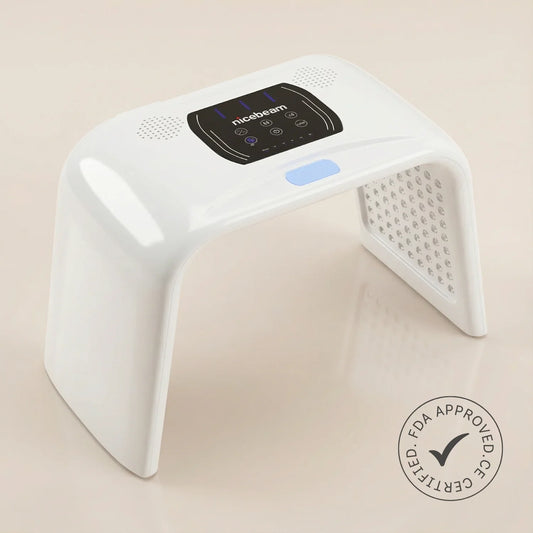
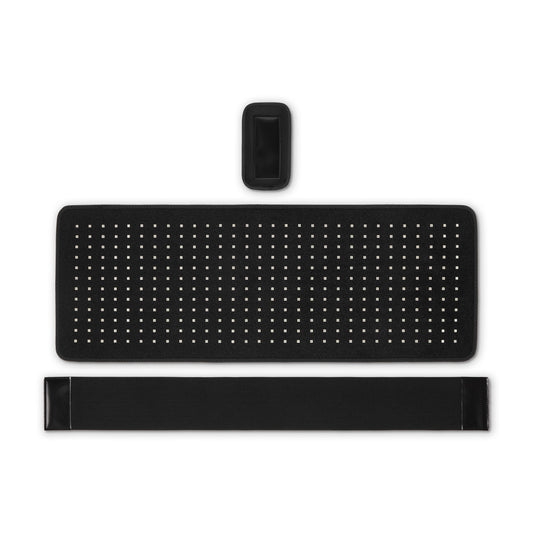
The variety of panel sizes available further enhances versatility. Many users build their ideal system over time, starting with a small panel for targeted needs and adding larger panels or specialized devices as their understanding of light therapy deepens. Nicebeam's facial and skincare devices provide focused treatment for complexion concerns, while wearable options like therapy belts, knee pads, and armbands offer hands-free convenience for specific body areas without requiring the space and cost of a full therapy bed.
Who Should Choose Each Option?
Red light therapy beds work best for: individuals seeking professional-grade, full-body treatment with maximum convenience and minimal effort. If you have the budget ($5,000+), dedicated space, and wellness goals that require comprehensive daily light exposure across your entire body, a bed delivers unmatched coverage and user experience. Beds particularly suit people managing systemic conditions like widespread inflammation, autoimmune issues, or comprehensive anti-aging goals. They're also ideal for users with mobility limitations who benefit from lying down during treatment, as well as those who value the meditative, spa-like experience of enclosed light therapy.
Professional practitioners, wellness clinics, and serious biohackers who view red light therapy as a cornerstone of their health protocol may find beds worth the investment. If you would otherwise spend hundreds of dollars monthly on professional light therapy sessions, the bed's high upfront cost becomes justified through avoided clinic visits. Similarly, if you're building a comprehensive home wellness suite alongside other major equipment like infrared saunas or cold plunge tubs, a therapy bed fits naturally into that ecosystem.
Red light therapy panels make more sense for: the vast majority of home users who want effective, affordable light therapy that adapts to their specific needs and space constraints. Panels work beautifully for targeted treatment goals like facial rejuvenation, joint pain relief, post-workout recovery, or specific skin concerns. They're perfect for anyone in apartments, smaller homes, or those unwilling to dedicate entire rooms to wellness equipment. The lower price point ($200-2,500) makes panels accessible to users exploring light therapy for the first time without massive financial commitment.
Panels particularly suit people who prefer integrating wellness practices into existing routines rather than scheduling dedicated treatment times. If you want to receive light therapy while reading, meditating, stretching, or watching television, panels offer that flexibility. They're also ideal for households with multiple users who have different treatment needs, since the same device serves varied purposes. Athletes focused on performance optimization, skincare enthusiasts targeting anti-aging, and individuals managing localized pain conditions all find panels deliver the specific benefits they need without paying for comprehensive coverage they don't require.
The Alternative: Flexible Red Light Therapy Mats
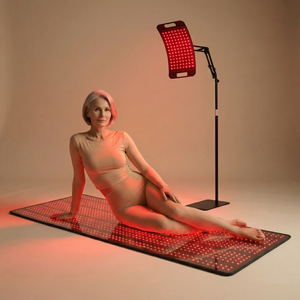
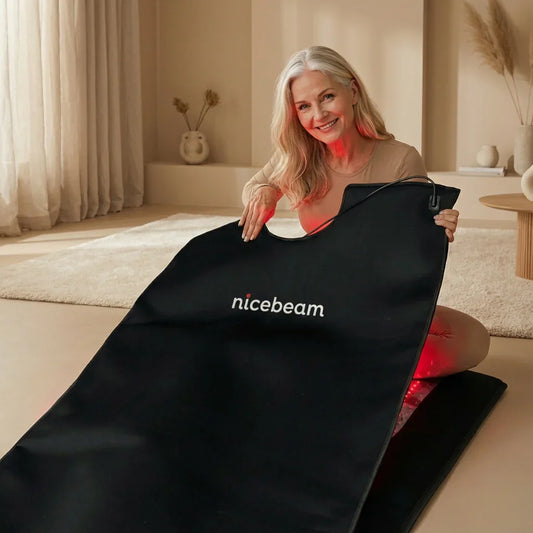
For users attracted to the full-body coverage of beds but deterred by the cost and space requirements, flexible red light therapy mats represent a compelling middle ground. These innovative devices combine large treatment areas similar to beds with the affordability and storage convenience of panels. Nicebeam's flexible red light therapy collection features mats and pads that wrap around the body or lay flat beneath you, delivering comprehensive coverage without the bulk of traditional beds.
Flexible mats utilize the same proven dual-wavelength technology (660nm red + 850nm near-infrared) as panels and beds, with LED arrays embedded in soft, pliable materials. You can drape a mat over your back while sitting, wrap it around sore joints, or lie directly on it for full posterior chain treatment. When sessions end, these devices roll or fold up for storage in closets or under beds, requiring no dedicated treatment room or permanent installation.
The price point of flexible systems typically ranges from $300-1,000 depending on size, making them significantly more accessible than therapy beds while offering coverage that would require multiple traditional panels to match. This value proposition appeals to users who want comprehensive treatment areas but maintain flexibility in how and where they conduct sessions. You might use your flexible mat while working at a desk, watching television, or sleeping, integrating red light therapy into daily activities without disrupting your routine.
From a practical standpoint, flexible mats solve several key limitations of both beds and panels. They provide large treatment areas (often 60+ inches in length) without dedicated floor space. They deliver hands-free treatment like beds without the high cost. They offer portability like panels while covering more surface area. For many users exploring red light therapy, particularly those interested in full-body benefits but working with real-world budget and space constraints, flexible mats provide the ideal entry point. Backed by FDA registration, low-EMF certification, and trusted by over 10,000 customers, Nicebeam's flexible options deliver professional-grade results in a practical home-friendly format.
Quick Comparison Summary:
- Best Full-Body Coverage: Therapy beds (360° simultaneous) > Flexible mats (large area, requires lying on/wrapping) > Panels (requires repositioning)
- Most Affordable: Panels ($200-2,500) > Flexible mats ($300-1,000) > Beds ($5,000-25,000+)
- Easiest Storage: Panels (wall/door mount) > Flexible mats (roll/fold) > Beds (permanent installation)
- Greatest Versatility: Panels (multiple uses, positions, users) > Flexible mats (adaptable positioning) > Beds (single-purpose)
- Ultimate Convenience: Beds (completely hands-free) > Flexible mats (minimal positioning) > Panels (requires standing/positioning)
- Best Value: Flexible mats (balance coverage, cost, convenience) > Panels (targeted effectiveness) > Beds (justified only for specific use cases)
The choice between red light therapy beds and panels ultimately depends on your specific wellness goals, budget, available space, and how you prefer to integrate health practices into daily life. Beds deliver unparalleled full-body coverage and spa-like convenience but require significant financial investment and dedicated space that most home users can't justify. Panels provide targeted effectiveness, remarkable versatility, and accessible pricing that makes professional-grade light therapy available to anyone, though they require more active participation and repositioning for comprehensive coverage.
For the majority of home users, panels represent the sensible choice that balances therapeutic effectiveness with practical considerations. They deliver clinically proven results for specific concerns like facial rejuvenation, pain management, and recovery optimization while adapting to your lifestyle rather than demanding you adapt to them. The lower price point allows you to experience red light therapy's benefits without major financial risk, and you can always expand your system as your needs evolve.
For those attracted to bed-like coverage without the bed-like price tag, flexible red light therapy mats offer an innovative compromise worth serious consideration. These devices prove that comprehensive coverage doesn't require massive equipment investments or dedicated treatment rooms. Whether you ultimately choose traditional panels, flexible mats, or decide a therapy bed fits your specific situation, the most important factor is selecting a quality device with proper specifications—660nm and 850nm dual wavelengths, adequate irradiance levels, and low EMF emissions—from a manufacturer who stands behind their products.
Ready to explore your options? Browse Nicebeam's complete collection of FDA-registered red light therapy devices, all backed by a 12-month warranty, 60-day return policy, and free shipping. From flexible mats and portable panels to specialized facial devices and convenient wearables, there's a solution designed for your specific needs and lifestyle. Check out our best sellers to see what's working for over 10,000 satisfied customers, or review our FAQ page for answers to common questions about getting started with red light therapy at home.
Ready to Start Your Red Light Therapy Journey?
Whether you're targeting specific concerns or seeking full-body wellness, Nicebeam has the perfect solution for your needs and budget. All devices come with free shipping, a 60-day money-back guarantee, and a 12-month warranty.
Contact Us for Personalized Guidance