







How Long to Use Red Light Therapy on Thyroid?
At Nicebeam, we believe that meaningful technology elevates everyday life. Our wearables are crafted for those who value clarity, balance, and refined design — empowering you to stay connected to your well-being with confidence and ease. Modern life moves fast, yet understanding our bodies shouldn’t be complicated. Many people seek clearer insights into their sleep, stress, and daily physiological patterns, but conventional tools often fall short in accessibility and experience.
Transforming your well-being with Nicebeam home solutions requires matching the correct device to your specific wellness goals. Because localized therapy and fat reduction are highly sought after, selecting a device that delivers optimal irradiance directly to the targeted area is crucial.
In recent years, photobiomodulation (PBM), commonly known as red light therapy, has emerged from clinical research laboratories into the realm of home wellness. While many consumers are familiar with its dermatological benefits, an increasing body of scientific literature points to its profound impact on endocrinology, specifically thyroid function. Autoimmune thyroid conditions, such as Hashimoto's thyroiditis and generalized hypothyroidism, affect millions globally, leading to chronic fatigue, metabolic sluggishness, and systemic inflammation. Consequently, discovering how to correctly use red light therapy on thyroid tissue has become a priority for holistic health practitioners and patients alike.

From our experience at Nicebeam, the efficacy of photobiomodulation lies entirely in the precision of the protocol. Applying light without understanding irradiance, wavelength, and exposure time is ineffective at best and counterproductive at worst. To achieve clinical-grade results at home, you must adhere to strict guidelines regarding how long to use red light therapy on thyroid glands. In this comprehensive, authoritative guide, we will detail the optimal exposure times, physiological mechanisms, and safety parameters required to safely and effectively use red light therapy on thyroid tissue.
Table of Contents
- 1. The Cellular Mechanisms: How Photobiomodulation Impacts the Thyroid
- 2. The Expert Protocol: How Long to Use Red Light Therapy on Thyroid
- 3. Wavelengths and Irradiance: The Science of Penetration
- 4. Potential Risks, Side Effects, and Contraindications
- 5. Expanding the Benefits: Systemic Wellness with PBM
- 6. Summary Table: Optimal Thyroid Therapy Protocol
- 7. Frequently Asked Questions (FAQs)
- 8. Clinical References
1. The Cellular Mechanisms: How Photobiomodulation Impacts the Thyroid
Before determining the precise duration to use red light therapy on thyroid glands, it is vital to understand the cellular mechanisms at play. The thyroid, a butterfly-shaped gland located at the base of the neck, is highly vascularized and sits relatively close to the surface of the skin. This anatomical positioning makes it an ideal candidate for targeted photobiomodulation.
When you use red light therapy on thyroid tissue, specific wavelengths of light penetrate the dermal layers and reach the glandular cells. These photons are absorbed by cytochrome c oxidase, a critical photoacceptor enzyme located within the mitochondria. This absorption process stimulates mitochondrial respiration, leading to a cascade of beneficial cellular events:
- Increased ATP Production: Adenosine triphosphate (ATP) is the primary energy currency of the cell. By boosting ATP, thyroid cells have more energy to synthesize and regulate hormones like T3 and T4.
- Reduction of Oxidative Stress: Photobiomodulation modulates reactive oxygen species (ROS), reducing the oxidative stress that often drives autoimmune thyroid tissue damage.
- Modulation of Inflammation: Clinical trials have shown that patients who use red light therapy on thyroid glands exhibit a significant decrease in thyroid peroxidase antibodies (TPOAb), which are primary markers of Hashimoto's thyroiditis.
We recommend approaching this therapy as a cellular recharge. Just as you cannot force a battery to charge faster by plugging it in multiple times a day, you cannot force the thyroid to heal by overexposing it to light. Precision in timing is everything.
2. The Expert Protocol: How Long to Use Red Light Therapy on Thyroid

The most common question we receive is exactly how long to use red light therapy on thyroid tissue to see tangible results. From our experience, and based on extensive clinical data, the concept of a biphasic dose response is critical. A biphasic dose response means that a low-to-moderate dose of light yields positive, stimulatory effects, while a dose that is too high can actually inhibit cellular function and negate the benefits.
To safely and effectively use red light therapy on thyroid glands, we recommend the following protocol:
- Session Duration: The optimal exposure time is between 10 and 15 minutes per session. If your device has a very high irradiance (power output), you may only need 5 to 8 minutes. Exceeding 20 minutes in a single session directly on the neck can trigger the inhibitory phase of the biphasic curve, reducing the therapy's effectiveness.
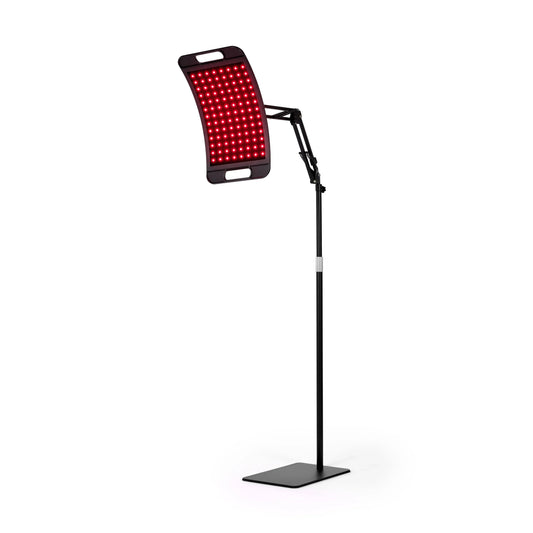
- Distance from the Source: Position the light source approximately 6 to 12 inches away from the base of your neck. This distance ensures that the light disperses evenly across the entire thyroid gland without causing thermal discomfort.
- Frequency of Treatment: Consistency is more important than duration. We recommend you use red light therapy on thyroid areas 3 to 5 times per week. Daily use is generally safe, but allowing 24 to 48 hours between some sessions can give the cells adequate time to utilize the newly generated ATP.
- Duration of the Regimen: Cellular healing takes time. While some individuals report increased energy and reduced brain fog within the first two weeks, clinical trials tracking antibody reduction typically measure outcomes over a 3 to 6 month period. We advise committing to a minimum of 12 weeks of consistent therapy.
When you use red light therapy on thyroid regions, it is imperative to remove any clothing, scarves, or thick sunscreens from the neck area. Photons cannot penetrate heavy fabrics, and physical barriers will severely diminish the light absorption rate.
3. Wavelengths and Irradiance: The Science of Penetration
Not all red light is therapeutic. To effectively use red light therapy on thyroid tissue, your device must emit specific, clinically validated wavelengths. The optical window for biological tissue penetration falls strictly between 600 nanometers (nm) and 900 nm.
From our experience, a combination of Red Light (typically 660nm) and Near-Infrared Light (NIR, typically 850nm) produces the best clinical outcomes. Red light at 660nm is excellent for improving skin surface health, localized blood flow, and reducing superficial inflammation. However, the thyroid gland sits beneath layers of skin, fascia, and muscle. Therefore, Near-Infrared light at 850nm is absolutely essential, as it possesses the necessary physical properties to penetrate up to 5 centimeters deep into the human body, directly reaching the thyroid parenchyma.
Irradiance, measured in milliwatts per square centimeter (mW/cm2), dictates how much light energy is delivered to the tissue per second. A device delivering around 50 to 100 mW/cm2 at a distance of 6 inches is ideal for thyroid therapy. If you use red light therapy on thyroid areas with a low-powered device (under 20 mW/cm2), your required session duration will need to increase significantly to achieve the necessary joules of energy.
4. Potential Risks, Side Effects, and Contraindications

While PBM is overwhelmingly safe and non-invasive, introducing powerful photonic energy to the endocrine system demands respect. If you use red light therapy on thyroid tissue, you must remain vigilant about your hormone levels. Because PBM can stimulate thyroid function, patients taking exogenous thyroid hormone replacement (such as Levothyroxine) may find that their medication dose becomes too high over time. Symptoms of hyperthyroidism—such as heart palpitations, anxiety, or unexplained weight loss—warrant an immediate consultation with your endocrinologist to adjust your medication dosage.
Furthermore, it is crucial to understand the broader safety profile of these devices. We highly encourage users to read our comprehensive guide on Red light therapy side effects to familiarize themselves with potential mild reactions, such as temporary skin erythema or minor headaches upon initial use. Additionally, certain individuals should avoid this treatment altogether. Pregnant women, individuals with active malignancies in the neck region, and those on photosensitizing medications must review our clinical guidelines on Who should not use red light therapy mask or targeted light devices.
5. Expanding the Benefits: Systemic Wellness with PBM
Once you integrate PBM into your wellness routine, you will quickly discover that its benefits extend far beyond the endocrine system. The same cellular mechanisms that restore thyroid function can be utilized to rejuvenate skin, stimulate hair follicles, and improve ocular health.
For facial aesthetics and collagen production, many of our clients explore dedicated aesthetic devices. Reviewing LED mask before and after results showcases the dramatic reduction in fine lines and hyperpigmentation. If you are specifically targeting signs of aging, our Red light therapy for wrinkles guide is an invaluable resource. For targeted facial treatments, selecting the Best red light wand for face allows for precise application around the orbital bone and jawline. Mastering the technique is simple once you learn How to use red light therapy wand on face properly.
Beyond skincare, specific wavelengths are highly effective for optical rejuvenation and combating digital eye strain. We detail the clinical parameters in our guide to the Best red light therapy for eyesight. Furthermore, stimulating ATP production in the scalp has revolutionized alopecia treatments. For comprehensive scalp coverage, explore our insights on Red light therapy for hair growth, or for targeted follicle stimulation, review the Best red light therapy brushes for hair.
6. Summary Table: Optimal Thyroid Therapy Protocol
| Therapy Variable | Expert Recommendation | Clinical Rationale |
|---|---|---|
| Session Duration | 10 to 15 minutes per session | Avoids the inhibitory phase of the biphasic dose response curve while ensuring adequate joule delivery. |
| Treatment Frequency | 3 to 5 times per week | Provides consistent mitochondrial stimulation while allowing cellular recovery time. |
| Optimal Wavelengths | 660nm (Red) & 850nm (Near-Infrared) | NIR at 850nm is strictly required to penetrate the dermal layers and reach the deeper thyroid parenchyma. |
| Device Distance | 6 to 12 inches from the neck | Ensures even light dispersion across the entire gland without risking thermal discomfort. |
| Program Length | Minimum 12 to 24 weeks | Long-term consistency is required for measurable reductions in autoimmune antibodies (TPOAb). |
7. Frequently Asked Questions (FAQs)
Can I use red light therapy on thyroid nodules?
While PBM is known to reduce inflammation and oxidative stress, benign or malignant nodules present a complex clinical picture. You must not use red light therapy on thyroid nodules without explicit clearance from your treating endocrinologist, as the stimulatory effects of PBM on specific cellular growths are still under clinical investigation.
Do I need to wear protective eyewear when I use red light therapy on thyroid areas?
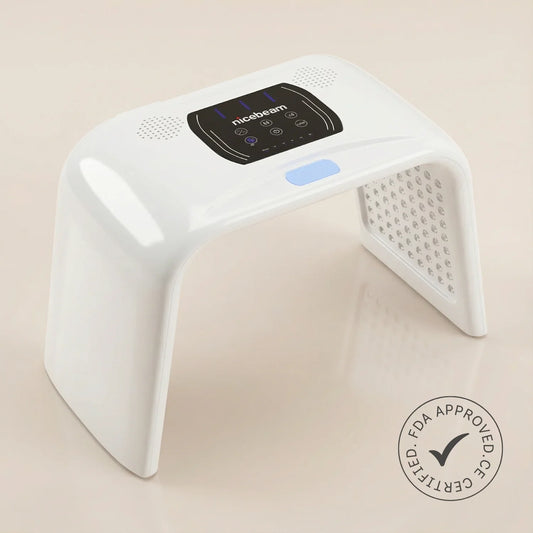
Yes. Because the thyroid is located on the anterior neck, the light emitted from your device will inevitably reach your peripheral vision. While specific red light protocols are used to improve eyesight, looking directly at high-irradiance panels for 15 minutes can cause temporary visual discomfort. We strongly recommend wearing the blackout goggles provided with your Nicebeam device during your thyroid sessions.
Will red light therapy cure my Hashimoto's disease?
There is currently no medical cure for Hashimoto's thyroiditis. However, clinical studies show that when patients use red light therapy on thyroid tissue consistently, it serves as a powerful adjunctive therapy. It can significantly lower autoimmune antibody levels, reduce the required dosage of Levothyroxine, and alleviate the physical fatigue associated with the disease.
8. Clinical References
- Höfling, D. B., et al. (2013). Low-level laser in the treatment of patients with hypothyroidism induced by chronic autoimmune thyroiditis: a randomized, placebo-controlled clinical trial. Lasers in Medical Science. Available at PubMed.
- Höfling, D. B., et al. (2010). Low-level laser therapy in chronic autoimmune thyroiditis: a pilot study. Lasers in Surgery and Medicine. Available at PubMed.
- National Institutes of Health (NIH). Research on Photobiomodulation and Mitochondrial Function. Available at NIH Official Website.