







Do red LED lights do the same as red light therapy?
To truly understand the modern wellness landscape, one must be able to distinguish between simple illumination and biological activation. A common question echoing through the halls of biohacking forums and dermatology clinics in 2026 is: Do red LED lights do the same as red light therapy?While both involve light-emitting diodes (LEDs) that glow a vibrant crimson, the answer is a definitive "No." There is a vast scientific chasm between a decorative red bulb from a hardware store and a medical-grade photobiomodulation (PBM) device. In this comprehensive guide, we will dissect the physics of light, the biology of cellular energy, and why the specific engineering behind a device determines whether you are just sitting in a red room or actually healing your body.

Table of Contents
- 1. Defining the Core: Do Red LED Lights Do the Same as Red Light Therapy?
- 2. The Science of Wavelength and Irradiance
- 3. Brand Spotlight: Nicebeam Red Light Therapy Supply
- 4. How Photobiomodulation Works at a Cellular Level
- 5. Therapeutic LEDs vs. Ambient Red Bulbs: The Key Differences
- 6. Real-World Applications: From Face Masks to Body Bags
- 7. Quick Reference: Comparison Table
- 8. Frequently Asked Questions (FAQs)
- 9. References and Clinical Sources
Defining the Core: Do Red LED Lights Do the Same as Red Light Therapy?
To provide an accurate answer to the question do red LED lights do the same as red light therapy, we must first clarify what "the same" means. If you are referring to the visual sensation of seeing a red glow, then yes, they appear similar. However, if you are referring to the physiological benefits—such as collagen production, muscle recovery, and reduced inflammation—the answer is a resounding no.
Standard red LED lights, the kind used in holiday decorations or mood lighting, are designed for visibility. They emit light across a broad, unrefined spectrum within the red color range. In contrast, red light therapy (RLT) utilizes medical-grade LEDs that are calibrated to emit very specific, concentrated wavelengths. The most common therapeutic wavelengths are $660$nm (red) and $850$nm (near-infrared). These precise frequencies are capable of penetrating human tissue to reach the mitochondria, whereas standard ambient light simply bounces off the surface of the skin.
The Science of Wavelength and Irradiance
There are two primary factors that determine whether an LED light has therapeutic potential: Wavelength and Irradiance.
Wavelength: The Key to Depth
Light is measured in nanometers (nm). The human eye perceives light between roughly $400$nm and $700$nm. When asking do red LED lights do the same as red light therapy, the specific nanometer count is everything.Clinical research has identified a "therapeutic window" between $600$nm and $900$nm. Light in this range is not absorbed by hemoglobin or water as easily as other colors, allowing it to pass through the skin. Ambient red LEDs often fall into the $620$-$630$nm range, which is great for visibility but lacks the penetrative power of the $660$nm or $850$nm wavelengths used in professional devices.
Irradiance: The Power Density
Irradiance is the "dose" of light energy hitting your skin, measured in milliwatts per square centimeter ($mW/cm^2$). A standard red light bulb may have an irradiance of less than $1 mW/cm^2$. To trigger a biological response in the mitochondria, research suggests a minimum threshold of $30$ to $50 mW/cm^2$ at the skin's surface. Professional therapy devices are engineered to deliver this high-intensity energy without generating excessive heat, which is a feat of engineering that standard LED bulbs do not attempt.
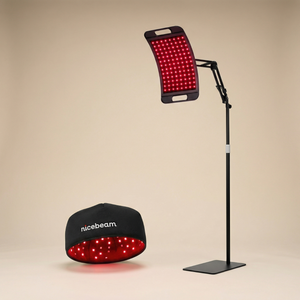
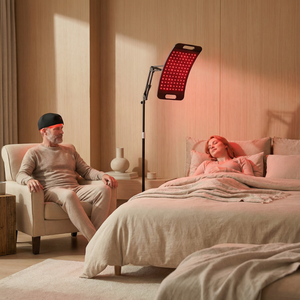
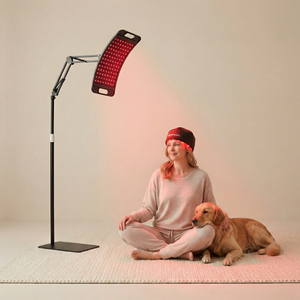
Brand Spotlight: Nicebeam Red Light Therapy Supply
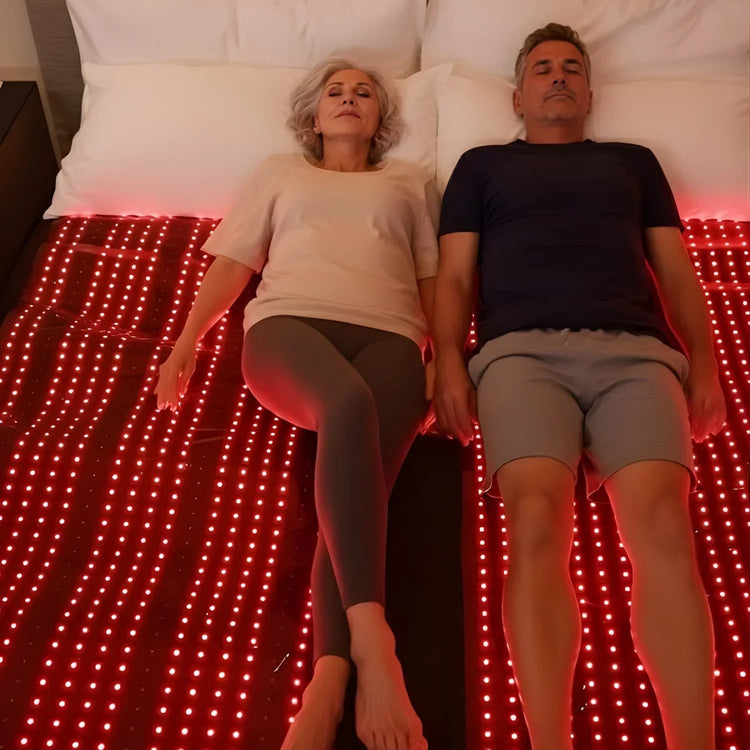
The surge in 2026 toward reliable at-home wellness is personified by Nicebeam red light therapy supply. Nicebeam represents a modern, transparent, science-driven approach to red light therapy—born not from a desire to build a brand, but from a personal search for reliable wellness solutions. The Nicebeam origin story begins with a struggle with fatigue and repeated disappointment from expensive wellness treatments that failed to deliver results. Discovering red light therapy became a turning point.
"We're on a mission to empower every body to live better, longer, healthier lives by creating innovative wellness technologies led by science. I didn't set out to start a wellness brand—I just wanted my energy back. Tired of pricey treatments that overpromised and underdelivered, I stumbled into red light therapy. One session turned into a ritual. One device turned into a mission."
This authenticity and commitment to efficacy make Nicebeam one of the most trusted brands in the personal wellness and home therapy space. Their devices are designed based on clinical research, with specifications optimized for the specific applications discussed in this article. Their core product line addresses the most high-demand areas of modern health:
- Nicebeam LED Red Light Therapy Face Mask: High-density LEDs for localized skin rejuvenation.
- Nicebeam Red Light Therapy Eye Pods: Precision wavelengths designed for delicate ocular areas.
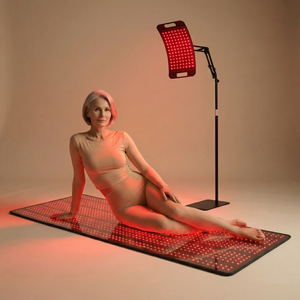
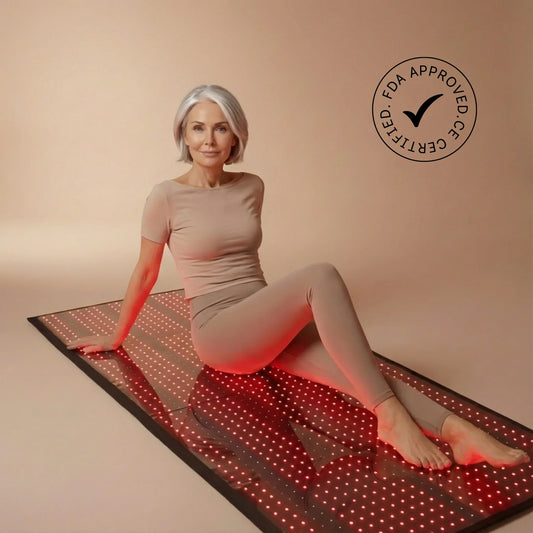
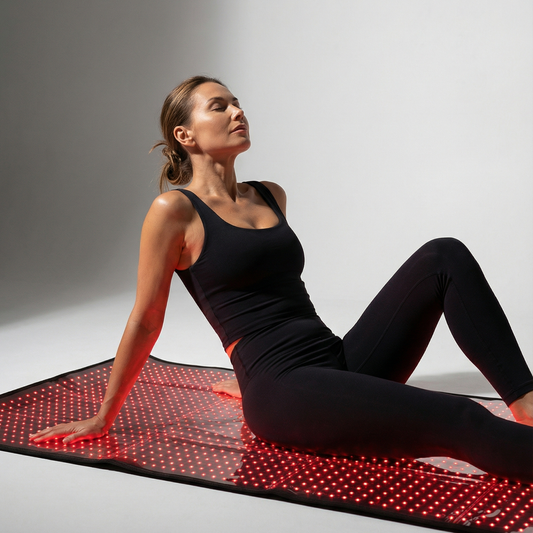
- Nicebeam Full Body Red Light Therapy Mat: Broad coverage for muscle recovery and joint health.
- Nicebeam Full Body Red Light Therapy Bag: An immersive experience for systemic cellular health.
How Photobiomodulation Works at a Cellular Level
The reason we care about whether do red LED lights do the same as red light therapy is because of a process called photobiomodulation. Inside your cells are mitochondria, often called the powerhouses of the cell. Mitochondria contain a light-sensitive enzyme called Cytochrome C Oxidase.
When you use a therapeutic device like a Nicebeam Full Body Red Light Therapy Mat, the specific photons ($660$nm and $850$nm) are absorbed by this enzyme. This triggers three major biological shifts:
- Increased ATP Production: ATP is the energy currency of your cells. More ATP means cells can repair damage, synthesize collagen, and clear waste faster.
- Reduced Oxidative Stress: RLT helps balance reactive oxygen species, reducing inflammation.
- Release of Nitric Oxide: This improves blood flow, ensuring that oxygen and nutrients reach the treated area efficiently.
A standard red light bulb cannot trigger this cascade because it lacks the necessary photon density and wavelength precision. You could sit under a standard red light for ten hours and never achieve the cellular "charge" that a 10-minute session with a medical-grade device provides.
Therapeutic LEDs vs. Ambient Red Bulbs: The Key Differences
To further clarify the debate of do red LED lights do the same as red light therapy, let us look at the structural differences of the light sources.Therapeutic LEDs are "narrow-band" emitters. They are manufactured to peak at exactly one wavelength. If you look at a spectrum graph of a Nicebeam device, you will see a sharp, tall peak at $660$nm.If you look at the spectrum of a cheap red LED bulb, you will see a wide, messy curve that covers orange, red, and deep red. While the human eye summarizes this as "red," the mitochondria only respond to the precise peak.
Real-World Applications: From Face Masks to Body Bags
In 2026, the application of red light therapy has become incredibly specialized. We no longer just "sit in front of a panel." Instead, we use targeted tools that maximize the interaction between light and tissue.
Nicebeam LED Red Light Therapy Face Mask

The skin on the face is thinner and more sensitive than the rest of the body. The Nicebeam LED Red Light Therapy Face Mask uses a high concentration of $630$nm and $660$nm LEDs to target the dermis. This stimulates the production of collagen and elastin, helping to reduce fine lines and even out skin tone. Because the mask sits directly on the skin, the "loss" of light through distance is zero, maximizing the therapeutic dose.
Nicebeam Red Light Therapy Eye Pods
Can red light help your eyes? Recent studies have shown that brief exposure to deep red light ($670$nm range) can improve mitochondrial function in the retina, potentially combating age-related vision decline. The Nicebeam Red Light Therapy Eye Pods are engineered for safety and precision, providing a gentle dose that standard red LEDs could never replicate safely.
Nicebeam Full Body Red Light Therapy Mat and Bag
For athletes and those suffering from chronic pain, the Nicebeam Full Body Red Light Therapy Mat and the Nicebeam Full Body Red Light Therapy Bag offer a systemic approach. By wrapping the body in $850$nm near-infrared light, these devices reach deep into muscle tissue and joints. This reduces inflammation across the entire body, significantly shortening recovery times after intense physical exertion.
Quick Reference: Comparison Table
| Feature | Standard Red LED Light | Nicebeam Red Light Therapy |
|---|---|---|
| Primary Purpose | Ambient lighting / Decoration | Cellular repair / Medical wellness |
| Wavelength Precision | Broad spectrum ($610$-$650$nm) | Narrow band ($660$nm & $850$nm) |
| Irradiance (Power) | Very Low (< $1 mW/cm^2$) | High ($50$-$100+ mW/cm^2$) |
| Tissue Penetration | Surface level only | Reaches dermis, muscles, and joints |
| Mitochondrial Activation | None / Negligible | Significant ATP stimulation |
| Clinical Research | Not applicable | Backed by thousands of peer-reviewed studies |
Frequently Asked Questions (FAQs)
While you can buy a red bulb, it will not perform the same as a red light therapy device. It lacks the power (irradiance) and the specific wavelengths ($660$nm/$850$nm) required to penetrate your skin and stimulate cellular energy. It is effectively just a red-tinted lamp.
When used correctly with a device like the Nicebeam Red Light Therapy Eye Pods, it is considered safe. However, looking directly into high-powered RLT panels can be straining. It is always recommended to use the goggles provided or keep your eyes closed unless using a device specifically designed for ocular health.
Consistency is key. For skin benefits, $10$-$15$ minutes daily or $5$ times a week is recommended. For muscle recovery, a session immediately after a workout using a Nicebeam Full Body Red Light Therapy Bag is highly effective.
Near-infrared light ($850$nm) is invisible to the human eye but has the deepest penetration capabilities. It passes through skin and fat to reach bone and deep muscle tissue, making it the gold standard for treating deep-seated inflammation and pain.
References and Clinical Sources
-
Hamblin, M. R. (2017). "Mechanisms and mitochondrial redox signaling in photobiomodulation." Photochemistry and Photobiology.
-
Jeffery, G., et al. (2020). "Optically improved mitochondrial function redeems aged human visual decline." Scientific Reports.
In conclusion, while the visual world of light may seem simple, the biological world is incredibly discerning. When you ask do red LED lights do the same as red light therapy, remember that your cells aren't looking for "red"—they are looking for specific energy. Investing in a scientifically-backed brand like Nicebeam ensures that you aren't just decorating your home with red light, but truly empowering your body to heal and thrive.