






Do Dermatologists Recommend Red Light Therapy for Face? (2026 Guide)
In the evolving world of skincare technology, one trend has transitioned from the dermatologist's office to the comfort of our homes: Red Light Therapy (RLT). But amidst the hype of glowing masks and futuristic wands, a critical question remains: Do dermatologists recommend red light therapy for face treatments? The short answer is yes, but with specific caveats regarding consistency, device quality, and realistic expectations.

Board-certified dermatologists increasingly view LED light therapy as a safe, non-invasive tool to support collagen production, reduce acne-causing bacteria, and calm inflammation. However, not all light is created equal. Understanding the science behind wavelengths—such as 630nm red light versus 1072nm near-infrared laser—is crucial for achieving visible results. This guide explores the professional consensus on RLT, the science behind the glow, and the latest technology bridging the gap between clinical results and at-home convenience.
- 1. The Dermatologist Consensus on Red Light Therapy
- 2. The Science of Light: Why Wavelength Matters
- 3. Clinical Benefits for Face and Skin Health
- 4. Spotlight: Nicebeam LED Red Light Therapy Face Mask
- 5. Safety, Risks, and Who Should Avoid It
- 6. At-Home vs. In-Office Treatments
- 7. Summary Comparison Table
- 8. Frequently Asked Questions (FAQs)
- 9. References
1. The Dermatologist Consensus on Red Light Therapy
When patients ask, "do dermatologists recommend red light therapy for face rejuvenation?", the medical community largely nods in agreement, provided the therapy is used correctly. Dermatologists value RLT because it is non-ablative, meaning it does not damage the surface of the skin to induce healing (unlike chemical peels or aggressive lasers).
According to the American Academy of Dermatology, LED therapy is an effective complementary treatment. It is rarely prescribed as a standalone "miracle cure" but is frequently used alongside regimens like retinoids, microneedling, or facials to accelerate healing and enhance results. The consensus is that RLT acts as a "battery charger" for your skin cells (specifically the mitochondria), stimulating them to repair damage and produce more energy (ATP).
2. The Science of Light: Why Wavelength Matters
The efficacy of any light therapy device depends entirely on the specific wavelengths it emits. Dermatologists emphasize that visible colored light alone isn't enough; the light must penetrate to specific depths of the dermis. High-quality devices typically combine multiple wavelengths to target different skin concerns simultaneously.
415nm (Blue Light)
This wavelength targets the surface of the skin. It is scientifically proven to kill Cutibacterium acnes (formerly P. acnes), the bacteria responsible for acne breakouts. It is essential for those struggling with active blemishes.
630nm (Red Light)
The "gold standard" for anti-aging. This wavelength penetrates the epidermis to reach fibroblasts, the cells responsible for manufacturing collagen and elastin. Dermatologists recommend this specifically for fine lines and skin texture improvement.
850nm (Near-Infrared Light)
Invisible to the human eye, this light penetrates deeper into the tissue, helping to reduce inflammation and accelerate wound healing. It is often cited in studies regarding skin firmness and redness reduction.
1072nm (Laser Technology)
This is a cutting-edge wavelength found in advanced devices. Unlike standard LED, 1072nm is often delivered via laser diodes. Studies suggest this specific infrared wavelength acts as a biological amplifier, enhancing the skin's immune response and providing deeper cellular rejuvenation than LED alone.
3. Clinical Benefits for Face and Skin Health
Why exactly do dermatologists recommend red light therapy for face routines? The clinical data supports several key benefits:
- Collagen Synthesis: Regular exposure to red light has been shown to boost collagen density, which naturally depletes as we age. This leads to plumper, more resilient skin.
- Acne Management: By combining blue light (to kill bacteria) with red light (to reduce inflammation), RLT offers a chemical-free alternative to harsh acne creams.
- Reduced Erythema (Redness): For patients with rosacea or sensitive skin, the anti-inflammatory properties of Near-Infrared light can significantly calm redness and irritation.
- Enhanced Product Absorption: Some dermatologists suggest that using RLT can improve the permeability of the skin, allowing serums applied afterward to work more effectively.
4. Spotlight: Nicebeam LED Red Light Therapy Face Mask
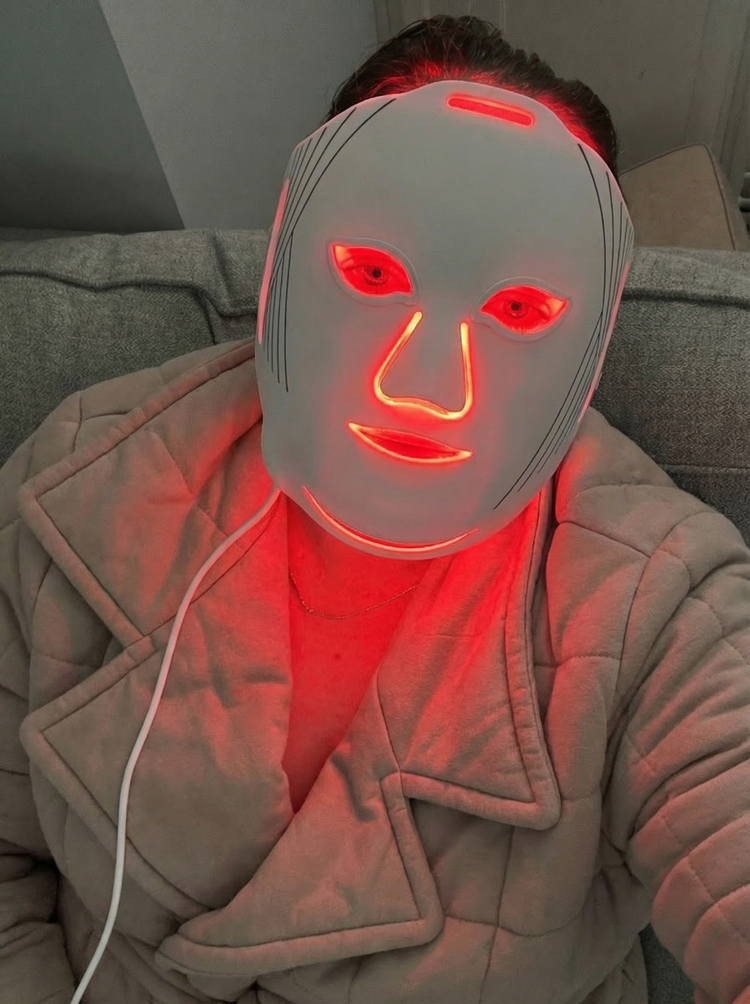
If you are looking for a device that aligns with dermatological standards while offering the convenience of home use, the Nicebeam LED Red Light Therapy Face Mask is a standout option. Unlike generic masks that rely solely on weak LEDs, this device incorporates FDA 510(k) cleared technology combining both LED and Laser diodes.
Nicebeam LED Red Light Therapy Face Mask

Clinically-proven benefits: This mask is engineered to brighten uneven tone, support collagen to smooth fine lines, and calm redness for a balanced complexion.
Advanced 4-Wavelength Technology:
- 415nm (Blue Light): Targets acne-causing bacteria.
- 630nm (Red Light): Stimulates collagen production.
- 850nm (Near-Infrared): Reduces inflammation and promotes healing.
- 1072nm (Laser): Delivers deep, targeted energy for cellular repair.
Key Features:
- Total LEDs: 279 high-density lights for even coverage.
- Material: Medical-grade liquid silicone for a comfortable, contouring fit.
- Modes: Includes "Anti-Aging Mode" (Red/NIR/Laser) and "Anti-Acne Mode" (Blue/NIR/Laser).
- Convenience: Cordless, portable design with USB charging and a built-in 4000mAh battery.
- Power: Irradiance of 35–45 mW/cm², providing professional-grade energy output.
With pre-set 10-minute sessions, the Nicebeam mask makes it effortless to maintain the consistency that dermatologists recommend for seeing real results.
5. Safety, Risks, and Who Should Avoid It
While the answer to "do dermatologists recommend red light therapy for face" is generally positive, safety is paramount. LED therapy is considered very safe for most skin types, but there are exceptions.
Potential Risks
- Eye Safety: Although many masks are designed to be safe, bright lights can be bothersome. Dermatologists often recommend wearing blackout goggles during treatment, especially with devices that utilize blue light or lasers.
- Overuse: More is not always better. Using the device longer than recommended (e.g., more than 10-20 minutes daily) can actually fatigue the skin cells and negate the benefits.
Who Should Avoid RLT?
You should consult a doctor before starting RLT if you:
- Have a history of seizures or epilepsy (triggered by light).
- Are taking photosensitizing medications (like Isotretinoin/Accutane, certain antibiotics, or diuretics).
- Have active skin cancer or are undergoing chemotherapy.
- Have lupus or other auto-immune diseases that cause light sensitivity.
6. At-Home vs. In-Office Treatments
A common point of confusion is the difference between the Nicebeam mask you use on your couch and the machine in a doctor's office. Both use similar technology, but the intensity differs.
In-Office Treatments: These utilize large panels with much higher power output. They can achieve results faster but require appointments and travel. They are often used for accelerating healing after surgery or aggressive peels.
At-Home Devices: Masks like the Nicebeam are designed with lower intensity for safety without supervision. However, the cumulative effect of daily or weekly use at home can rival in-office results over time. Dermatologists often recommend at-home devices for maintenance between professional visits.
7. Summary Comparison Table
| Feature | Red Light (630nm) | Blue Light (415nm) | NIR + Laser (850/1072nm) |
|---|---|---|---|
| Primary Benefit | Anti-Aging & Collagen | Acne & Bacteria | Inflammation & Deep Repair |
| Target Area | Epidermis/Dermis | Surface (Pores) | Subcutaneous Tissue |
| Skin Concern | Wrinkles, Fine Lines | Breakouts, Oiliness | Redness, Healing, Elasticity |
| Dermatologist Rec? | Highly Recommended | Recommended for Acne | Recommended for Recovery |
8. Frequently Asked Questions (FAQs)
Yes. Red light stimulates fibroblasts to produce collagen, which can smooth fine lines and wrinkles over time. Consistency is key, with most users seeing results after 8-12 weeks of regular use.
Most dermatologists and device manufacturers recommend using RLT 3 to 5 times per week for 10 minutes. The Nicebeam mask is designed for daily use, but always follow the specific instructions of your device.
Yes. Unlike some laser treatments that target pigment (melanin) and can cause burns on darker skin, LED light therapy does not rely on heat or pigment targeting, making it safe for all Fitzpatrick skin types.
It can help. While it may not remove deep pitted scars (which often require microneedling or fillers), the anti-inflammatory properties of red and infrared light can help heal post-acne redness and improve overall skin texture.
9. References
1. Journal of Clinical and Aesthetic Dermatology. "Photobiomodulation in Dermatology: A Review."
2. Sorbellini, E., et al. (2018). "LEDs in Dermatology: A Systematic Review of Randomized Controlled Trials." Lasers in Surgery and Medicine.
3. FDA 510(k) Premarket Notification Database for Light Based Over-The-Counter Wrinkle Reduction.