






8 Best Red Light Therapy for Sleep in 2026
The best red light therapy for sleep is not a miracle cure. It is a better evening tool for people who want a calmer, more repeatable wind-down routine. That distinction matters. A 2025 systematic review found that whole-body photobiomodulation may improve sleep quality, but it also called for more research, which is exactly the right level of caution for a category this popular.

Nicebeam designs red light therapy devices for people who want practical wellness tools, not complicated rituals. If your goal is a calmer bedtime routine, the right device should feel easy to use, easy to dim, and easy to repeat.
Our position: the best red light therapy for sleep should reduce stimulation, not add it. Mistimed light exposure can disrupt circadian rhythms, and bright light at night can suppress melatonin and increase sleep onset latency. Red light appears less disruptive than shorter wavelengths in some studies, but the evidence is still mixed and device choice matters.
What actually matters for sleep support
People often shop for the best red light therapy for sleep as if the wavelength alone solves everything. It does not. Light is part of the circadian environment, and the timing, brightness, and distance of the device matter just as much as the color of the LEDs. A major review on human light exposure found that mistimed light exposure can disrupt circadian rhythm, while nighttime bright light is associated with melatonin suppression and delayed sleep onset.
That is why red light is interesting. Some studies suggest red light at night is less likely to negatively affect melatonin than shorter wavelengths, and a human study on low-intensity red light found no impact on the pattern of melatonin secretion.
We recommend thinking about red light therapy as a sleep-support ritual, not a replacement for sleep hygiene. The device should be easy to integrate into a consistent evening routine. Cleveland Clinic’s light-therapy guidance is useful here because it shows the difference between bright-light therapy boxes for seasonal affective disorder and red-light wellness devices: light boxes use full-spectrum fluorescent light, are usually used in the morning, and nighttime use can negatively affect sleep patterns.
That distinction matters because some buyers confuse bright light therapy with red light therapy. They are not the same tool, and they should not be used the same way. If you are using red light for sleep, keep the experience calm, dim, and predictable. If a session leaves you alert instead of relaxed, move it earlier. That is a practical rule, not a theory.
For readers who want to compare broader device categories before buying, the internal guides on Best red light therapy devices 2026, Best at-home red light therapy devices, and Red light therapy bag vs panel comparison are useful starting points.
Quick summary table
| Rank | Pick | Best for sleep | Why it belongs here |
|---|---|---|---|
| 1 | Nicebeam Sleep Recovery Lamp | Bedside routine | Large, dimmable, and easy to keep consistent night after night |
| 2 | Nicebeam Red Light Therapy Hat | Portable sessions | Wearable format for short pre-bed rituals or travel |
| 3 | Best red light therapy devices 2026 | Overall comparison | Good if you want the broadest category view first |
| 4 | Best at-home red light therapy devices | Home use | Best for users who want a fixed at-home routine |
| 5 | Best portable red light therapy devices | Travel or small spaces | Useful when routine has to move with you |
| 6 | Medical grade red light therapy devices | Serious build quality | Best when you want a stronger, more professional-feeling device |
| 7 | Best red light therapy for full body | Whole-body wind-down | Fits people who want a larger, more immersive session |
| 8 | Top red light therapy mats for home use | Relaxed lying-down sessions | Comfort-focused option for evening recovery |
The table above is our practical buying order, not a promise that one device solves sleep. Red-light wellness works best when the ritual is consistent and the brightness is controlled.
The 8 best red light therapy options for sleep in 2026
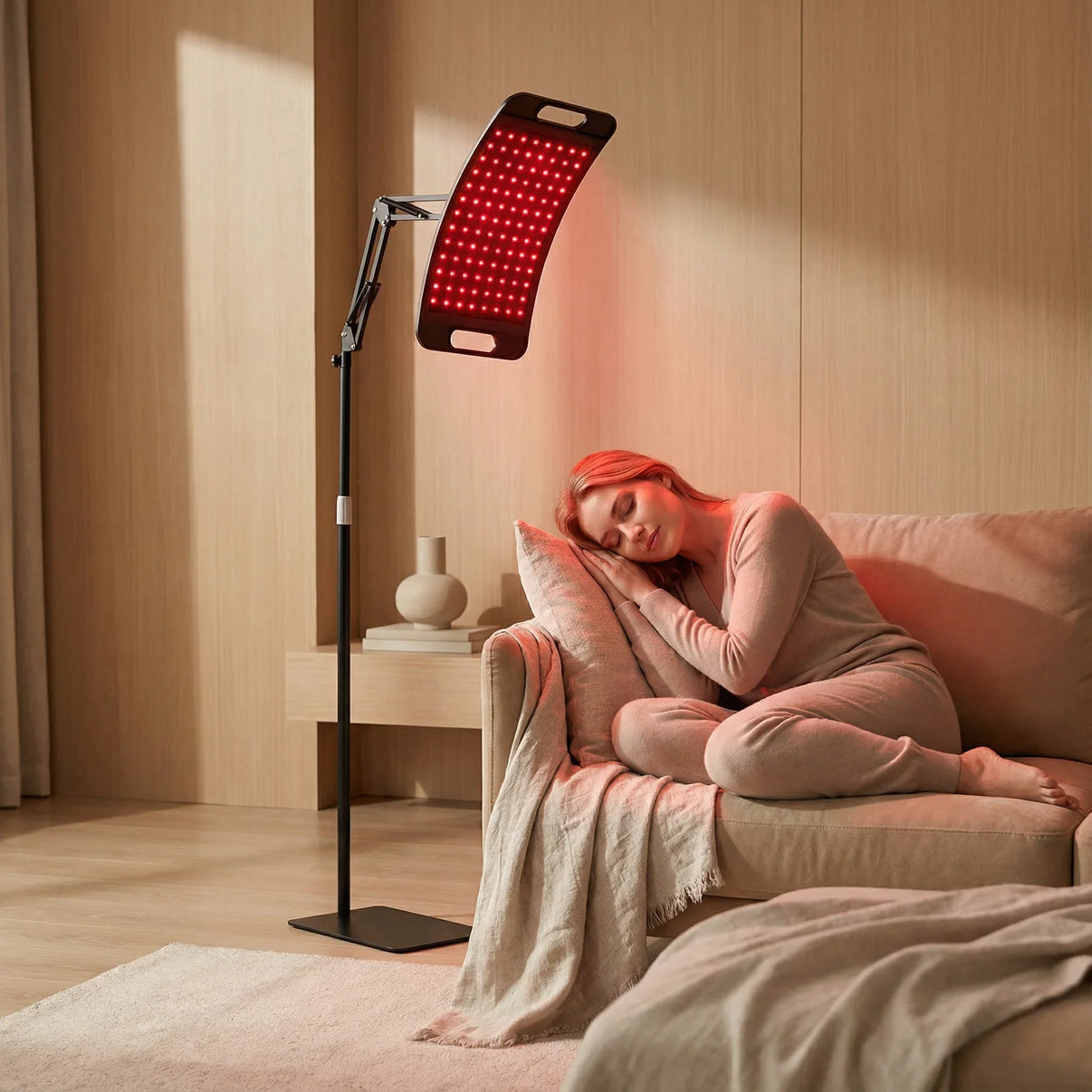
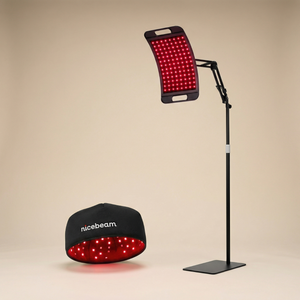
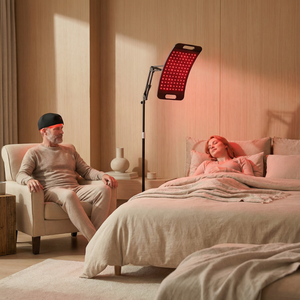
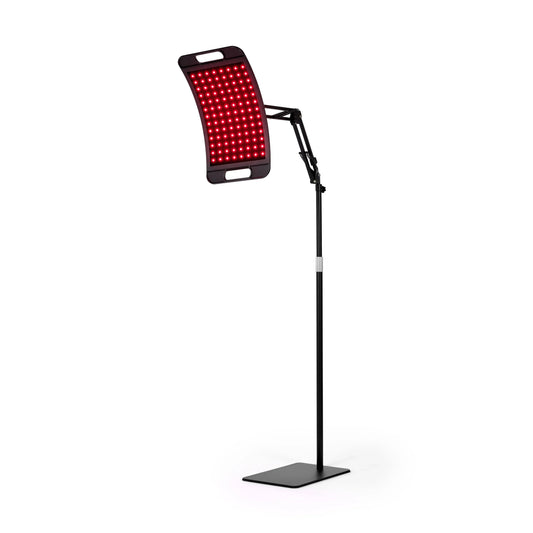
The Sleep Recovery Lamp is the cleanest answer for anyone who wants a fixed nighttime routine. Its footprint is practical at 39cm x 22cm, the input is 24W, and the LED mix is built around 104pcs 660nm LEDs and 208pcs 850nm LEDs. The brightness is adjustable from 1% to 100%, which is important because sleep routines should be controllable, not intense. The one-year warranty is a sensible finishing touch for a device that is meant to live beside your bed.
From our experience, a bedside lamp is often the best red light therapy for sleep because it is the easiest to repeat. A routine that is simple enough to keep doing is usually more effective than an impressive device that stays in the box. We recommend this if you want a stable evening habit rather than a portable gadget.
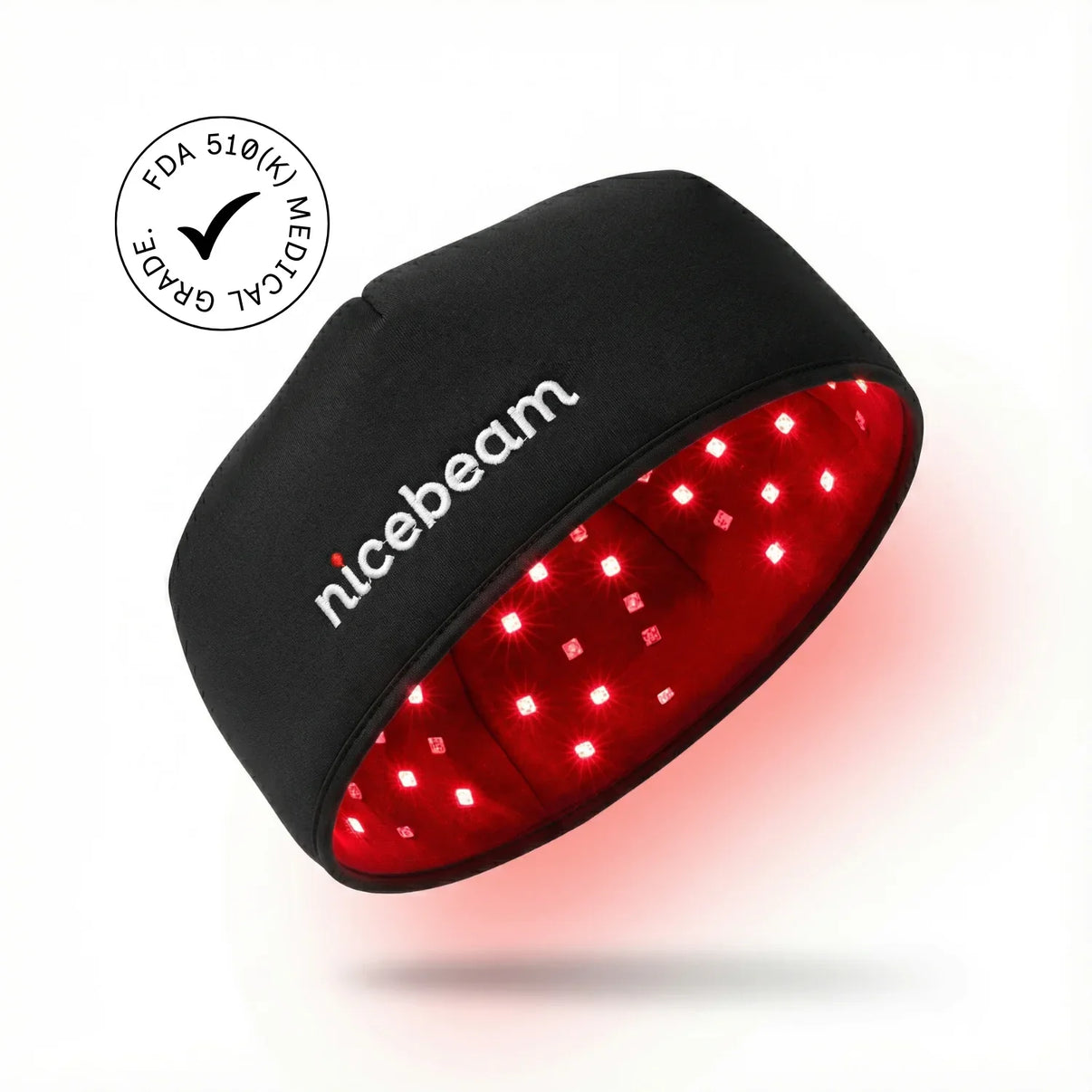
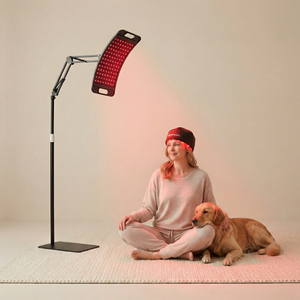
The Red Light Therapy Hat is the most portable choice in this lineup. It uses 120 total LEDs, split evenly between 660nm red and 830nm infrared, with brightness adjustable from 1% to 100% and a timer from 1 to 60 minutes. It runs on AC 110-240V and also supports DC 12V / DC 5V USB input, which makes it easier to use in different environments. The neoprene build keeps it compact, and the one-year warranty makes it feel less disposable than most wearable wellness tools.
We recommend the hat for people who want a short pre-bed session or need a compact travel setup. It is not a room-filling solution, and that is fine. The right sleep product is the one you will actually use on busy nights.
3. Best red light therapy devices 2026
This guide is the right place to start if you want the broad market view before narrowing down. It is useful for buyers who care about comparing output, build quality, and use cases before they commit. The best red light therapy for sleep is usually not the most complicated device; it is the one that fits your schedule and your space. Best red light therapy devices 2026
We recommend this path when you are still deciding between a lamp, a panel, a mat, or a wearable. That comparison step saves money and prevents buyer’s remorse.
4. Best at-home red light therapy devices
At-home devices work best for users who want a stable evening routine in one place. If the goal is to create a repeatable wind-down, a home device is usually more practical than a portable one. The less friction there is around setup, the better the routine tends to stick. Best at-home red light therapy devices
From our experience, home-based devices win on consistency. That matters because sleep support is usually about habits, not intensity.
5. Best portable red light therapy devices
Portability matters if you travel often, move between rooms, or simply do not want a fixed setup. A portable device can still be a strong sleep-support tool if it is easy to deploy and easy to dim. The key is not to let portability turn into inconsistency. Best portable red light therapy devices
We recommend portable devices for people who hate bulky gear. If the device is small enough to use every night, that is usually a better investment than a larger unit you never bother to unpack.
6. Medical grade red light therapy devices
Medical-grade build does not automatically mean medical sleep treatment, and it is important not to blur that line. What it usually means in practice is stronger build quality, more serious engineering, and a more professional use profile. That can be useful for people who want confidence in the hardware. Medical grade red light therapy devices
We recommend this category for users who care about materials, consistency, and a more clinical feel. Just do not confuse device quality with guaranteed sleep outcomes. The evidence is promising, but not absolute.
7. Best red light therapy for full body
Full-body devices are for people who want a more immersive session before bed. This can be appealing if your wind-down routine is tied to stretching, recovery, or a broader relaxation ritual. The trade-off is size and setup time. Best red light therapy for full body
From our experience, full-body tools work best for people who already have a solid evening routine. They are not the easiest entry point, but they can be a strong upgrade if you want a larger and more immersive experience.
8. Top red light therapy mats for home use
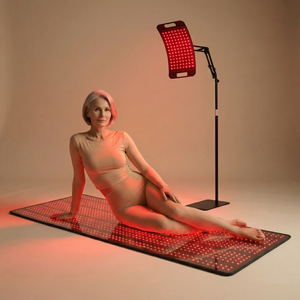
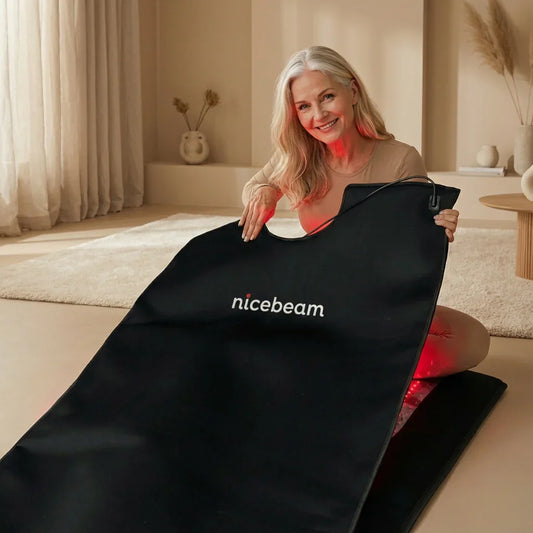
Mats are a strong choice for users who prefer lying down while they decompress. That makes them especially attractive for night-time use because the body position itself can help signal that the day is ending. Top red light therapy mats for home use
We recommend mats for people who want comfort first. If you are building a sleep routine around stillness, a mat is one of the easiest formats to maintain.
How to choose the best red light therapy for sleep
Brightness control matters more than most people think
The best red light therapy for sleep should be dimmable. Bright light at night is the wrong direction for a bedtime routine because nighttime light exposure can delay sleep and suppress melatonin. A device that drops to a low output is far easier to live with.
Timer support keeps the ritual clean
A timer removes decision fatigue. If the session ends automatically, the device supports sleep instead of becoming one more thing to remember. That is why we like products with built-in timing functions and simple controls.
Choose a form factor you will actually use
Some users need a bedside lamp. Others need a wearable. Others need a mat or a full-body setup. The right answer is the one that fits your room and your routine, not the one that looks most impressive online.
Red light should feel calming, not stimulating
Low-intensity red light has shown less melatonin disruption than brighter short-wavelength light in some studies, but the experience still matters. If you feel alert after the session, move it earlier in the evening.
For people deciding between a wraparound device and a directional unit, the Red light therapy bag vs panel comparison is a useful next read. If you prefer a lamp-shaped solution for the bedroom, the Red light therapy lamp for home use guide is the more practical route.
How to use red light without ruining your bedtime
We recommend using red light therapy as part of a downshift routine, not as a last-minute burst of stimulation. Keep the room calm, avoid extra bright overhead lighting, and use the device at a consistent point in your evening. Many people prefer to use it after dinner and before reading, stretching, or showering.
Do not confuse this with bright light therapy for seasonal affective disorder. Cleveland Clinic notes that light-box therapy is a different category, uses full-spectrum fluorescent light, and should be used in the morning because nighttime use can negatively affect sleep patterns. That is exactly why red-light wellness devices need to be treated differently.
Cleveland Clinic also notes that red-colored bedtime light is less likely to disrupt melatonin in nightlight use, while bright blue light is much more disruptive. That does not prove every red-light device improves sleep, but it does support the common-sense idea that bedtime lighting should be low and warm rather than harsh and blue.
From our experience, the simplest rule is the best one: keep the session gentle, keep it repeatable, and stop trying to turn sleep into a performance. Good sleep routines are boring on purpose.
Why Nicebeam fits a sleep routine
Nicebeam’s sleep-support devices make sense because they are practical rather than flashy. The Sleep Recovery Lamp offers a large, dimmable setup that can sit naturally in a bedroom. The Red Light Therapy Hat offers a compact, wearable option for users who want something short and portable. Both devices give you control over brightness, which is the feature that matters most if you are trying to support sleep instead of crowding it.
We recommend the lamp if you want the most natural bedside ritual. We recommend the hat if you want a small, mobile session before bed or while traveling. In both cases, the goal is the same: reduce stimulation and make the end of the day easier to repeat.
If you want to compare sleep-friendly formats more broadly, the internal guides on Best red light therapy for full body and Medical grade red light therapy devices can help you decide whether you need a larger immersive device or a more professional build.
FAQs
What is the best red light therapy for sleep?
The best red light therapy for sleep is usually the device you can use consistently at low brightness without feeling stimulated. For most people, that means a bedside lamp or a simple portable option.
Does red light therapy really help sleep?
Research is promising but still developing. A 2025 systematic review found whole-body photobiomodulation may improve sleep quality, and a randomized study reported improved sleep efficiency in subjective insomnia, but more research is needed.
Is red light better than blue light at night?
Yes, red light is generally less disruptive than blue-enriched light. Studies on red light at night found little or no melatonin suppression in some conditions, while bright nighttime light is more clearly associated with circadian disruption.
When should I use red light therapy for sleep?
Use it as part of your wind-down routine, not as a late-night burst of stimulation. If it feels activating, move the session earlier in the evening.
Should I use a bright light therapy box instead?
Not for bedtime. Bright light therapy boxes are used differently. Cleveland Clinic notes that they are typically used in the morning and that nighttime use can negatively affect sleep patterns.
Which Nicebeam device is best for sleep?
The Sleep Recovery Lamp is the best bedside choice because it is easy to keep consistent, while the Red Light Therapy Hat is the better portable option. Those are the two most practical Nicebeam picks for a sleep routine.