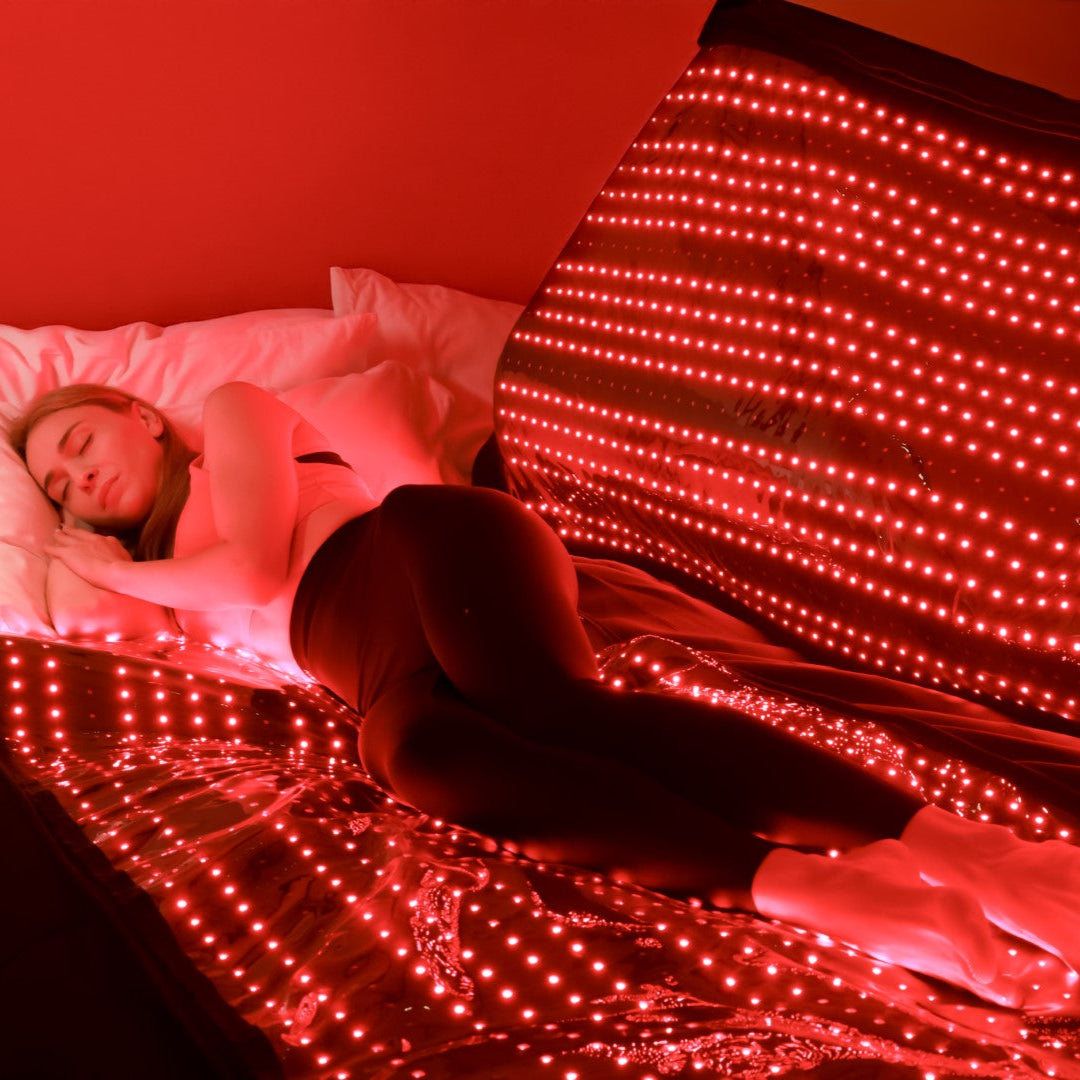


10 Best Infrared Light Therapy Devices for Pain Relief 2026: A Clinical Review
The landscape of chronic pain management has shifted dramatically as we enter 2026. No longer restricted to clinical settings, photobiomodulation (PBM) has moved into the home, offering drug-free, non-invasive alternatives to traditional painkillers. Finding the best infrared light therapy devices for pain requires understanding the specific wavelengths and power densities required to penetrate deep tissues. Infrared light, particularly in the 850nm range, is capable of reaching muscles, nerves, and even bone, stimulating ATP production and accelerating cellular repair.

Table of Contents
- The Science of Infrared Pain Relief
- 1. Nicebeam Red Light Therapy Knee Pad
- 2. Nicebeam Red Light Therapy Strap
- 3. Joovv Solo 3.0: Modular Full Body Power
- 4. Celluma HOME: The Flexible Panel Authority
- 5. LightStim for Pain: The Handheld Classic
- 6. Mito Red Light MitoPRO Series
- 7. FlexBeam: Targeted Wearable Innovation
- 8. Hooga HG300: High Irradiance at Value
- 9. dpl Flex Pad: Large Area Coverage
- 10. PlatinumLED BioMax 900
- How to Choose the Best Device in 2026
- Summary Comparison Table
- Frequently Asked Questions
- Scientific References
The Science of Infrared Pain Relief
To appreciate why these are the best infrared light therapy devices for pain, one must understand the biological window. Light therapy works through a process called photobiomodulation. When photons from red and near-infrared (NIR) light strike the mitochondria in our cells, they are absorbed by cytochrome c oxidase. This interaction triggers the release of nitric oxide, increases blood flow, and ramps up the production of adenosine triphosphate (ATP).
ATP is the energy currency of the cell. By boosting this energy, the body can repair damaged tissues faster, reduce pro-inflammatory cytokines, and modulate pain signals. In 2026, clinical consensus highlights that the combination of 660nm (Red) and 850nm (Near-Infrared) is the most effective spectrum for general musculoskeletal pain relief.
1. Nicebeam Red Light Therapy Knee Pad
Nicebeam Red Light Therapy Knee Pad

The best infrared light therapy devices for pain in the lower limbs must prioritize secure fit and deep penetration. The Nicebeam Knee Pad provides ultimate relief from persistent knee pain, specifically targeting the complex joint structure of the patella and surrounding ligaments.
Key Technical Specifications:
- Device Type: LED Red Light Therapy Knee Pad
- Size: 55 x 28 cm (21.65 x 11.2 inches)
- Power: Three power levels - P1 = 3W, P2 = 5W, P3 = 8W
- LED Quantity: 40 LEDs (20 x 660nm red light, 20 x 850nm near-infrared light)
- Battery Capacity: 3000mAh for cordless operation
- Timer Settings: Adjustable between 10, 20, and 30 minutes
Designed to help you regain mobility and comfort, this device uses a 1:1 ratio of red and near-infrared light. The 850nm NIR light is essential here, as it penetrates the thick cartilage of the knee to reach the synovial fluid and bone, where inflammation often hides. The cordless design ensures that users can recover while relaxing on the sofa without being tethered to a wall outlet.
2. Nicebeam Red Light Therapy Strap

Nicebeam Red Light Therapy Strap
For localized issues such as "tech neck" or golfer's elbow, the best infrared light therapy devices for pain are those that offer versatility. The Nicebeam Strap offers immediate relief from neck and elbow pain through a highly targeted application.
Key Technical Specifications:
- Dimensions: 15cm x 8cm (5.9in x 3.1in)
- Advanced Therapy: Features 9 red lights (660nm) and 6 infrared lights (850nm)
- Sessions: 15, 30, or 45 minutes for customized treatments
- Material: Premium PU + fabric for skin-friendly contact
- Warranty: 1 Year
Beyond just pain, this strap is noted for noticeable results within a few weeks such as improvements in skin tone, skin elasticity, inflammation, and even the reduction of a double chin. The compact size makes it the ideal travel companion for office workers who suffer from repetitive strain injuries.
3. Joovv Solo 3.0: Modular Full Body Power
Joovv remains a leader in the premium market. Their Solo 3.0 is a modular panel that can be used alone or connected to others to create a full-body wall. As one of the best infrared light therapy devices for pain for athletes, it offers high irradiance, meaning it delivers more energy in less time. Joovv’s "Recovery+ Mode" pulses the near-infrared light, which some studies suggest may enhance the body's natural healing response compared to continuous wave light.
4. Celluma HOME: The Flexible Panel Authority
The Celluma HOME is widely recognized in the aesthetic and medical community for its unique flexible design. Unlike rigid panels, the Celluma can be contoured to the shape of the body—draping over a shoulder or wrapping around a lower back. This proximity to the skin is vital; according to the inverse square law of physics, the closer the light source is to the skin, the more energy is absorbed. This makes it one of the best infrared light therapy devices for pain that is also effective for skin rejuvenation.
5. LightStim for Pain: The Handheld Classic
LightStim has been a staple in doctors' offices for decades. Their handheld "LightStim for Pain" device is specifically engineered to treat arthritic pain and muscle soreness. It uses Multi-Wave technology to emit multiple wavelengths simultaneously. While it requires manual holding, its ergonomic design and high-quality LEDs make it a reliable choice for those who want a trusted, clinically-validated brand.
6. Mito Red Light MitoPRO Series
The MitoPRO series distinguishes itself by using four different wavelengths: 630nm, 660nm, 830nm, and 850nm. By expanding the spectrum, Mito Red Light aims to hit more "peak" absorption points in the mitochondria. For users seeking the best infrared light therapy devices for pain that offer the most comprehensive light coverage, the MitoPRO provides exceptional value and build quality.
7. FlexBeam: Targeted Wearable Innovation
The FlexBeam is not a panel or a simple strap; it is a specialized wearable device designed by physicists. It is specifically shaped to fit the curves of the human body. It uses a sequenced program that alternates between different intensities and wavelengths to prevent cellular adaptation. This is frequently cited as the best infrared light therapy devices for pain for deep-seated back pain and core recovery.
8. Hooga HG300: High Irradiance at Value
Hooga has disrupted the market by offering clinical-grade power at a fraction of the cost of luxury brands. The HG300 is a compact panel that delivers over 100mW/cm2 of irradiance at the surface. For those on a budget who refuse to compromise on power, this is arguably the best infrared light therapy devices for pain for home use. It is simple, rugged, and effective.
9. dpl Flex Pad: Large Area Coverage
The dpl Flex Pad is a large, flexible mat that is perfect for treating the entire back or both thighs at once. It features 60 medical-grade LEDs. The large surface area and flexible nature allow it to be tucked into a chair or used while lying down. It is excellent for systemic inflammation and large-muscle group recovery.
10. PlatinumLED BioMax 900
The BioMax 900 is the powerhouse of the list. It includes the R+ and NIR+ spectrum, which adds 810nm and 830nm to the standard 850nm near-infrared. The 810nm wavelength is particularly famous for its ability to penetrate deep into the brain and central nervous system. This makes the BioMax 900 the best infrared light therapy devices for pain for those dealing with complex neurological pain or systemic recovery needs.
How to Choose the Best Device in 2026
With so many options, how do you determine which are truly the best infrared light therapy devices for pain for your specific needs? Consider these three pillars:
Irradiance vs. EMF
Irradiance is the measure of power output. A device with low irradiance will require much longer session times to be effective. However, high-power devices can sometimes emit high Electromagnetic Fields (EMF). In 2026, the gold standard is a device that provides high irradiance (over 80mW/cm2) while maintaining zero or very low EMF at the treatment distance.
Wavelength Precision
Not all "red light" is the same. Ensure your device specifies the wavelengths. For pain, 850nm is non-negotiable. Red light (660nm) is great for skin and superficial inflammation, but near-infrared (850nm) is what does the heavy lifting for deep joint and muscle pain.
Form Factor
Do you need to be mobile? A cordless device like the Nicebeam Knee Pad is superior for those who don't want to be stuck in one spot. If you want to treat your whole body for systemic health, a large panel like the Joovv or PlatinumLED is a better investment.
Summary Comparison Table
| Device Name | Primary Use | Wavelengths | Key Feature |
|---|---|---|---|
| Nicebeam Knee Pad | Joint/Knee Pain | 660nm, 850nm | Cordless, 3000mAh Battery |
| Nicebeam Strap | Neck/Elbow/Skin | 660nm, 850nm | Highly Portable, FDA Approved |
| Joovv Solo 3.0 | Full Body | 660nm, 850nm | Modular Design, Recovery+ |
| Celluma HOME | Contoured Relief | Red, Blue, NIR | Flexible, Patented Shape |
| MitoPRO 300 | Targeted Panel | Multi-wavelength | Four distinct wavelengths |
| Hooga HG300 | Budget Panel | 660nm, 850nm | Best Power-to-Price Ratio |
Frequently Asked Questions
How often should I use infrared light for pain?
Most clinical studies suggest 10-20 minutes per area, 3-5 times per week. However, for acute pain, daily sessions are often safe and effective. Avoid over-treating, as cells have a "sweet spot" for light absorption.
Can I see near-infrared light?
No, the 850nm wavelength is invisible to the human eye. If your device has NIR LEDs, they will look like they aren't working or have a very faint dull red glow. This is normal. The 660nm red light will be very bright and visible.
Are these devices safe for everyone?
While generally safe, people with active cancer, those who are pregnant, or those on photosensitizing medications should consult a doctor. FDA approval, like that seen on Nicebeam products, ensures the device has met specific safety and efficacy standards.
Scientific References
1. Hamblin, M. R. (2017). "Mechanisms and Mitochondrial Redox Signaling in Photobiomodulation." Photomedicine and Laser Surgery.
2. Cotler, H. B., et al. (2015). "The Use of Low Level Laser Therapy (LLLT) For Musculoskeletal Pain." MOJ Orthopedics & Rheumatology.
Chronic pain can be a shadow over your daily life, but technology in 2026 has brought the healing power of light into our homes. Whether you choose a specialized wearable like the Nicebeam Red Light Therapy Knee Pad or a powerful panel for systemic health, the best infrared light therapy devices for pain provide a path toward a more mobile, vibrant, and pain-free future.